
Bad business decisions are rarely the result of a lack of intelligence. More often, they happen when smart people act with incomplete information, too much noise, and not enough time to process any of it.
That is the real problem many businesses are solving in 2026, and that’s why AI tools and behavioral data have moved from interesting to essential. As adoption grows, many businesses are integrating AI digital workers to act on this data and automate decision-making at scale.
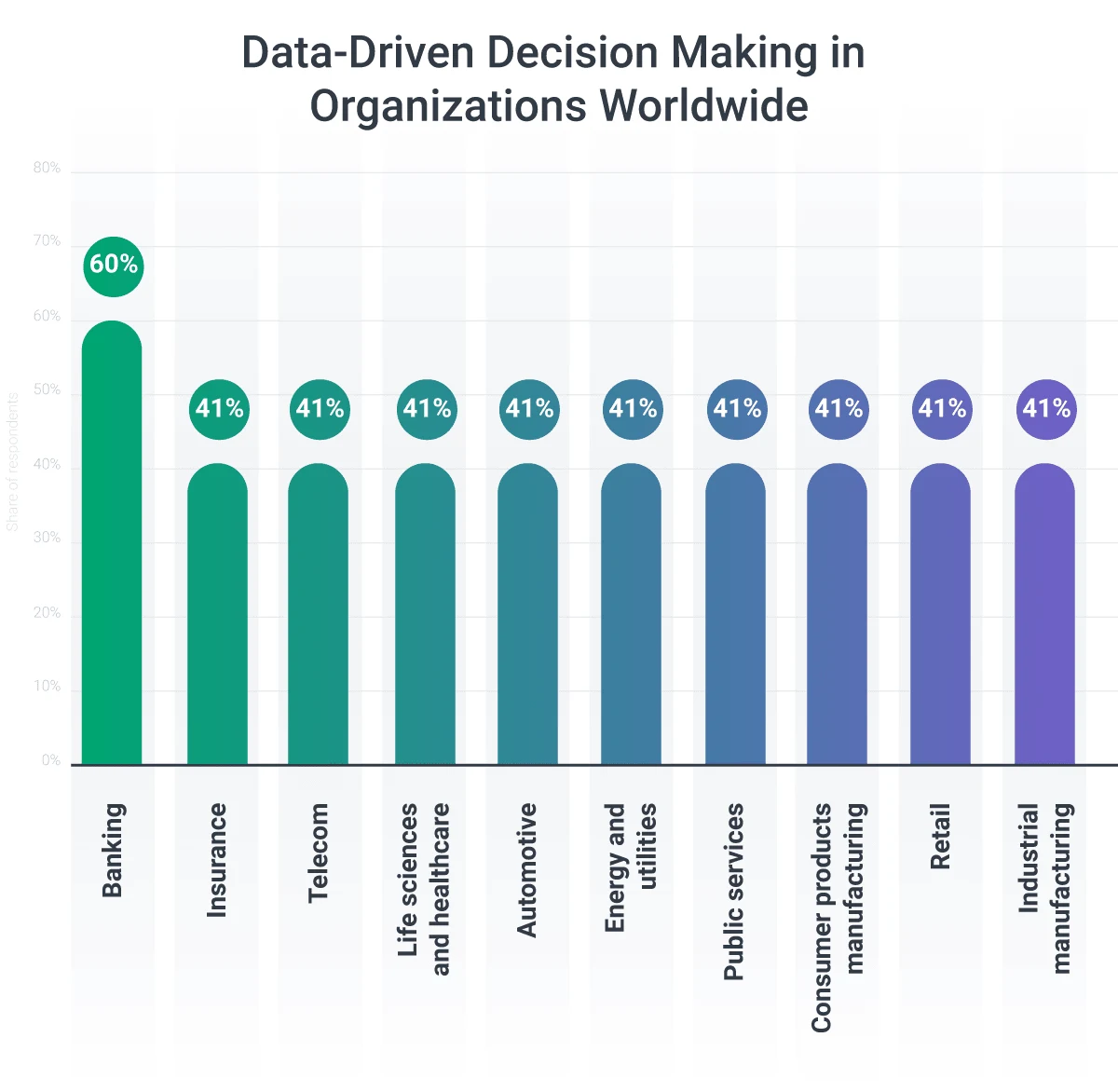
Organizations integrating AI into their decision-making processes see measurable improvements in operational efficiency, with behavioral data playing a central role in how those gains are achieved.
That sounds compelling, but the more interesting question is how it works in practice.
This article examines what behavioral data is, where it comes from, and how AI turns it into decisions that hold up.
 What You Are Already Sitting On and Probably Ignoring
There’s something most businesses get wrong before they even think about AI. They assume that they do not have enough data. In most cases, they have plenty. They just are not treating it as the asset it is.
Every time a user clicks a product page, that is a signal. It doesn’t matter whether the user bought something or not.
Similarly, every time an employee opens a document and closes it within thirty seconds, that is a signal. Every time a customer calls support about the same problem for the third time in two weeks, that is also a signal that the user is facing problems and nobody has fixed it yet.
Businesses can strengthen customer support operations with IVR & Custom Call Routing by Switchboard Cloud, helping callers reach the right department faster, reducing wait times, and generating valuable interaction data that supports smarter operational decisions.
Behavioral data is simply a record of what people do.
The gap between stated behavior and real behavior is where most business decisions go wrong. A survey tells you customers are satisfied. Behavioral data tells you they are abandoning checkout at a rate that sets off alarm bells, which is why teams looking to fix that friction often visit this site to explore how modern payment platforms use behavioral signals to improve the experience.
What behavioral data captures that surveys never will:
How long someone spends on a feature before giving up and going elsewhere
Which onboarding steps bleed the most users before they ever get to value
What internal teams search for most often, which tells you where your knowledge base has holes
When productivity patterns shift, it can surface burnout before someone hands in their papers
Organizations monitoring workplace behavioral signals are doing this at the employee level. For example, top employee monitoring tools for businesses help companies use activity data to make resource decisions based on real usage patterns rather than assumptions. These AI productivity tools can reveal where workflows are slowing down, which teams are overloaded, and where repetitive tasks are draining productivity across an organization.
In some cases, the data also surfaces collaboration bottlenecks that managers would never notice through weekly meetings or status reports alone.
The distinction that matters is whether the data is being used to help people or to police them. The former builds better organizations. The latter builds resentment.
 How AI Turns All of That Into Decisions Worth Making
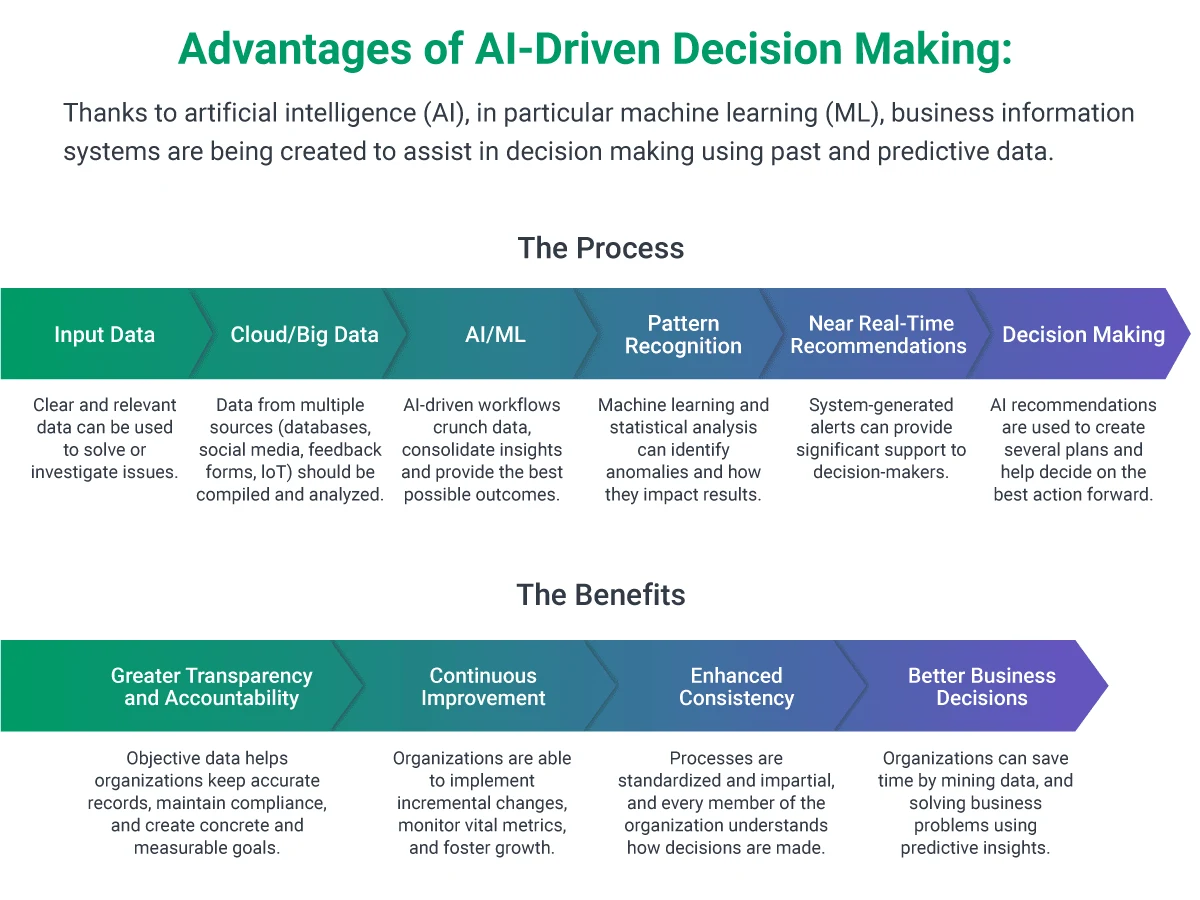
Collecting behavioral data is the easy part. The hard part has always been that a human being cannot hold thousands of micro-signals in their head simultaneously, cross-reference them against historical patterns, and produce a confident recommendation before the moment passes.
That is what AI does best.
1. It catches the buyer that your sales team would have missed
A prospect visits your pricing page four times in three days. They download a case study. They open your last two emails within minutes of receiving them.
A sales rep scanning their CRM would probably not connect all of that. This is precisely the gap that an AI SDR is built to close software trained to process behavioral signals at a volume and speed no human rep could replicate, then act on them without waiting for a manual review cycle.
But an AI running on behavioral signals flags this person as high-intent and sends an alert with full context before the rep even thinks to check.
That rep now shows up to the discovery call knowing what the prospect has been looking at. The conversation starts three steps further along than it would have otherwise. HubSpot's AI does this across the entire customer journey, and the reason it works is not the technology. It is the timing and the context.
2. It shows you where your product is silently frustrating people
The collaborative design platform Figma does not guess where its users get frustrated. They watch.
Behavioral data from thousands of design sessions tells them where the workflow breaks, where people abandon a task mid-way, and where the interface is creating confusion that users never bother to report.
The product roadmap that comes out of that is built on evidence rather than opinions or quarterly surveys.
3. It exposes how work flows through your organization
There is what the org chart says about how decisions get made, and then there is what Slack threads, email chains, and data from AI project management tools reveal.
Some teams that look productive on paper are burning hours a day on coordination that a single process change could eliminate.
Behavioral signals surface all of this in a way that a town hall or pulse survey never could.
4. It handles fraud at a volume no human team could match
As a leading financial infrastructure platform, Stripe does not detect fraud by checking whether a card number is valid. They run machine learning trained on behavioral signals: device fingerprinting, transaction velocity, geographic patterns that seem off, and sequences of actions that differ from how a legitimate user normally behaves.
As synthetic media becomes harder to spot, deepfake detection adds another layer for identifying manipulated identities before they influence fraud decisions.
The system makes millions of judgment calls every single day. Human analysts could not keep pace with that volume. And the fraud rates on Stripe-powered platforms are significantly lower than industry averages because of it.
5. It makes personalization feel like it came from a person
Have you seen Spotify's Discover Weekly? Well, it's not assembled by a music curator. It is built on what you skip, what you replay, what you save, and what you listen to all the way throughout the week.
The AI cross-references your patterns against users who have similar music tastes to you and then finds the music that you will connect with.
Millions of people describe it as feeling like a friend who genuinely knows their taste. That feeling is behavioral data running through a model that has had years to learn from billions of sessions.
6. It turns content investment from a gamble into a calculated bet
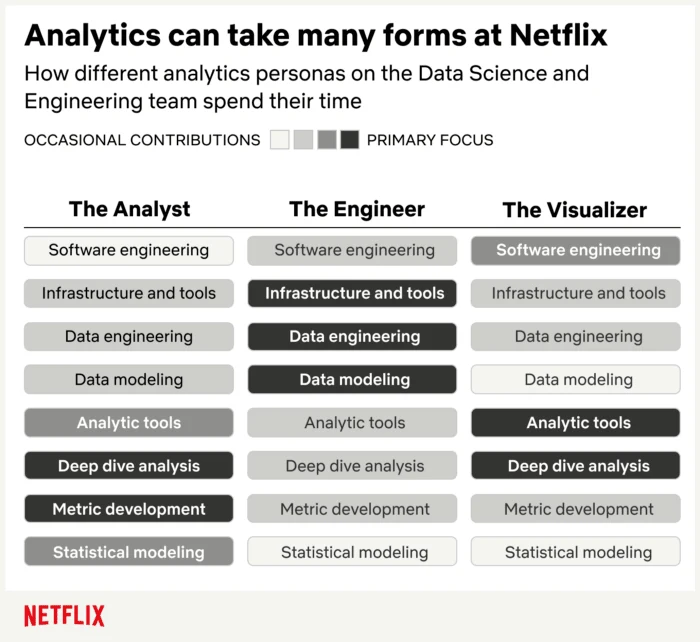
Netflix greenlighting decisions do not come from an executive's instinct. They come from watching what millions of people do after the credits roll, what they search for next, what they abandon fifteen minutes in, and what they start over from the beginning three weeks later.
House of Cards happened because the data showed a specific cluster of viewing behavior that a human programmer would never have noticed sitting in a room.
The data revealed a cluster of viewers who watched political dramas, sought out David Fincher's work, and had already consumed much of Kevin Spacey's back catalogue.
That overlap existed in the numbers long before anyone thought to ask for it.
How to Start Doing This Without Getting Lost in the Weeds
Most organizations fail at this not because they lack data or tools but because they start in the wrong place.
The difference between teams that change how they make decisions and teams that run a three-month pilot and quietly shelve it usually comes down to a handful of right choices at the start.
Step 1: Name the decision you are trying to improve
Not "better data culture." Something specific. "We cannot tell which leads are worth the team's time." "We lose customers somewhere between trial and conversion, and we do not know where." Start there.
Step 2: Map what you already collect before buying anything new
Most teams drown in data they never look at. CRM activity logs, support ticket histories, product usage drop-off reports, and email click patterns , and even customer interactions with tools like GS1 QR code generators can reveal behavior patterns teams often overlook. Something on that list probably already contains the answer to a decision you are currently making by instinct.
A platform like SoftwareXP helps compare which tools surface the right data for your context without spending weeks on research.
Step 3: Clean the data before you add AI to it
This is where most implementations fall apart. AI layered on top of poorly labeled and inconsistent data produces outputs nobody trusts. The foundation has to be solid before the intelligence layer is useful.
Step 4: Start by understanding patterns before you predict them
Predictive AI earns trust only when a team already understands the underlying patterns it is working from.
Start by answering the dumb-sounding questions first. Where are people dropping off? What does a bad week look like compared to a good one?
Get comfortable with those before you try to forecast who churns next month.
Step 5: Put feedback loops in place from day one
When the AI gets it wrong, that correction should feed back into the model. A system that improves over time earns trust. One that keeps making the same mistakes gets switched off.
For teams comparing which decision-support tools are built with this kind of learning, SoftwareXP provides structured breakdowns without vendor bias.
Step 6: Keep a human in the final call
Behavioral data and AI inform judgment. They do not replace it.
So, the best implementations treat the AI like a thorough analyst who never sleeps, but whose work still gets reviewed before it becomes a policy.
Your Decisions Are Only as Good as the Data Behind Them
Most businesses make high-stakes decisions based on information that is far less complete than they realize. The data that could change those decisions exists. It is just sitting in systems nobody thought to connect, collected in formats nobody thought to read, and surfaced at times when the decision has already been made.
AI and behavioral data do not fix that by removing humans from the equation. They fix it by making sure the human in the room has something worth working with when it counts. Companies that build this infrastructure now will identify opportunities and risks before competitors even know where to look.
If you want to find tools that fit the way your business makes decisions, SoftwareXP is worth a look. No vendor spin, no affiliate-driven rankings. Just structured comparisons that help you figure out what belongs in your stack and what does not.