
A founder friend of mine canceled his SimilarWeb subscription last month and asked me what to replace it with. His reason was simple. The tool told him his competitor's traffic was growing, but it couldn't tell him why or what to do about it.
That gap is exactly why people search for SimilarWeb competitors. So instead of dumping ten tools on you, I've organized this by the actual problem you're trying to solve. Find your situation, get your answer.
Why People Actually Leave SimilarWeb
Before the alternatives, let's be honest about what drives the search. These are the four complaints that come up constantly.
Pain Point | The Reality |
|---|---|
Price | Plans start at $199/month and climb fast, with deeper features locked behind annual contracts |
Small-site accuracy | Traffic estimates miss by 40 to 70 percent for sites under 50,000 monthly visits |
Shallow SEO tools | Limited keyword rankings, SERP tracking, and backlink analysis compared to dedicated platforms |
Data without execution | It shows the scoreboard but gives you no tools to change the score |
That last one matters most. SimilarWeb tells you a competitor is winning. Semrush and Ahrefs show you exactly which keywords, pages, and links are making them win.
To be fair, SimilarWeb has pushed hard into AI features in 2026, including AI Brand Visibility that tracks how often your brand appears in ChatGPT and Perplexity answers. If that specific capability matters to you, it remains genuinely unique. For everything else, keep reading.
Pick Your Path: The 30-Second Decision Map
Match your situation to your shortlist before reading a single review.
"I need SEO depth, not just traffic numbers" → Semrush or Ahrefs
"I'm on a tight budget" → SpyFu or Serpstat
"I run an agency with clients" → SE Ranking
"I want traffic intelligence closest to SimilarWeb" → Semrush .Trends
"I need to spot trends before competitors" → Exploding Topics
"I just need accurate data on my own site" → Google Analytics 4, free
Now let's go deeper on each path.
Path 1: The SEO Powerhouses
These are the tools for teams that want to act on competitive data, not just observe it.
Semrush: The Closest Full Replacement
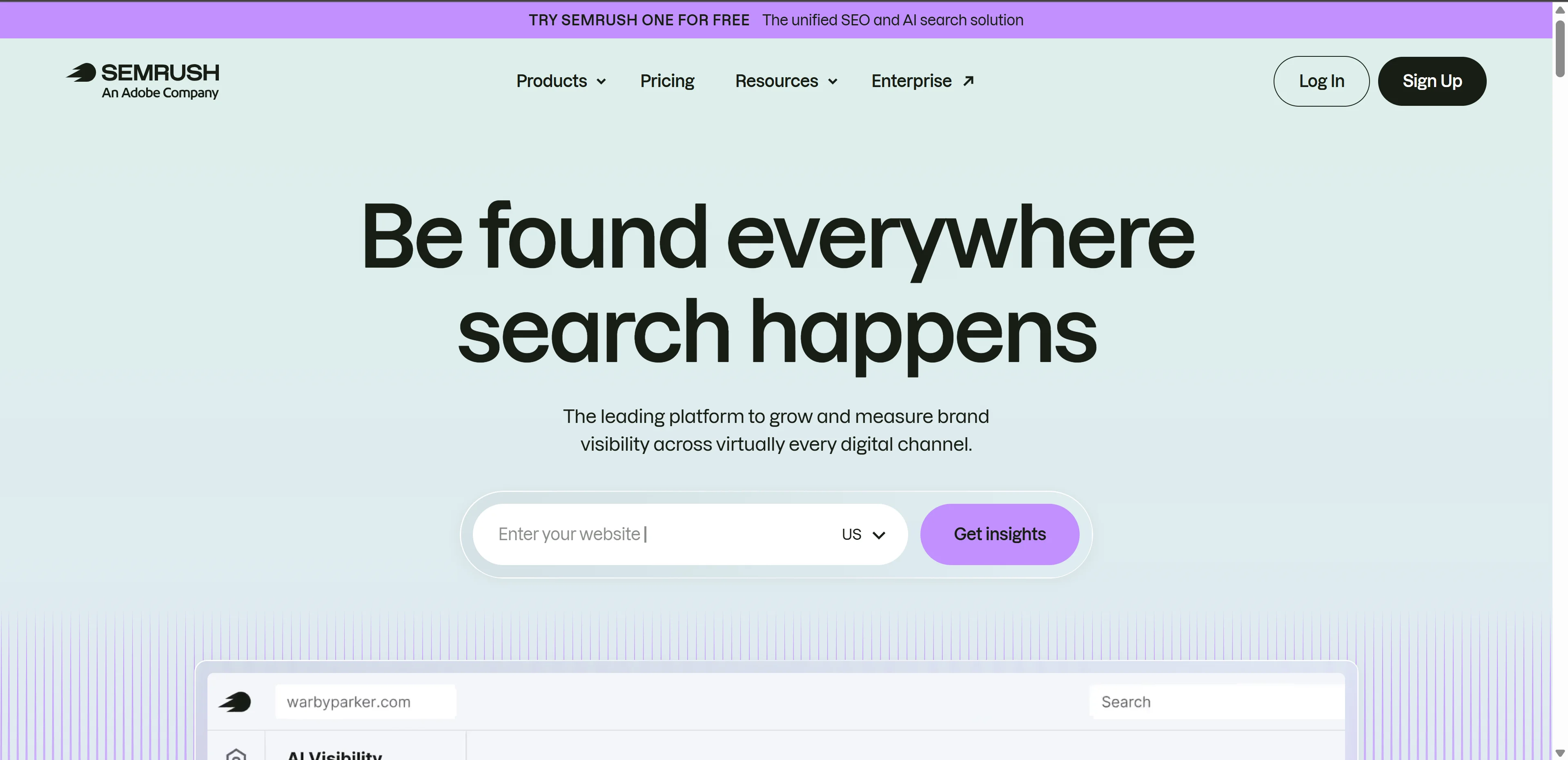
Semrush is the clearest upgrade path from SimilarWeb because its Traffic Analytics module directly overlaps with SimilarWeb's core offering while sitting inside a much bigger toolkit.
You get traffic estimates, visit duration, bounce rate, and source breakdowns. But alongside that sits a database of over 26 billion keywords, a backlink index exceeding 43 trillion links, daily rank tracking, and content tools.
In accuracy testing against real Google Analytics data, Semrush estimated organic traffic within 15 to 25 percent for sites above 100,000 sessions. That's meaningfully tighter than SimilarWeb's performance on the same sites.
 Semrush Pricing
The Pro plan runs $139.95 monthly. The .Trends add-on that fully replicates SimilarWeb's market intelligence costs another $289, bringing the complete replacement to roughly $429 per month.
Who Should NOT Use Semrush
Skip it if you're a solo blogger or small site owner who only needs occasional competitor checks. You'd be paying for a hundred features while using five. The learning curve is also real, so teams without a dedicated marketing person often abandon it half-configured. Start with SpyFu instead and upgrade when the workload justifies it.
Ahrefs: The Backlink King
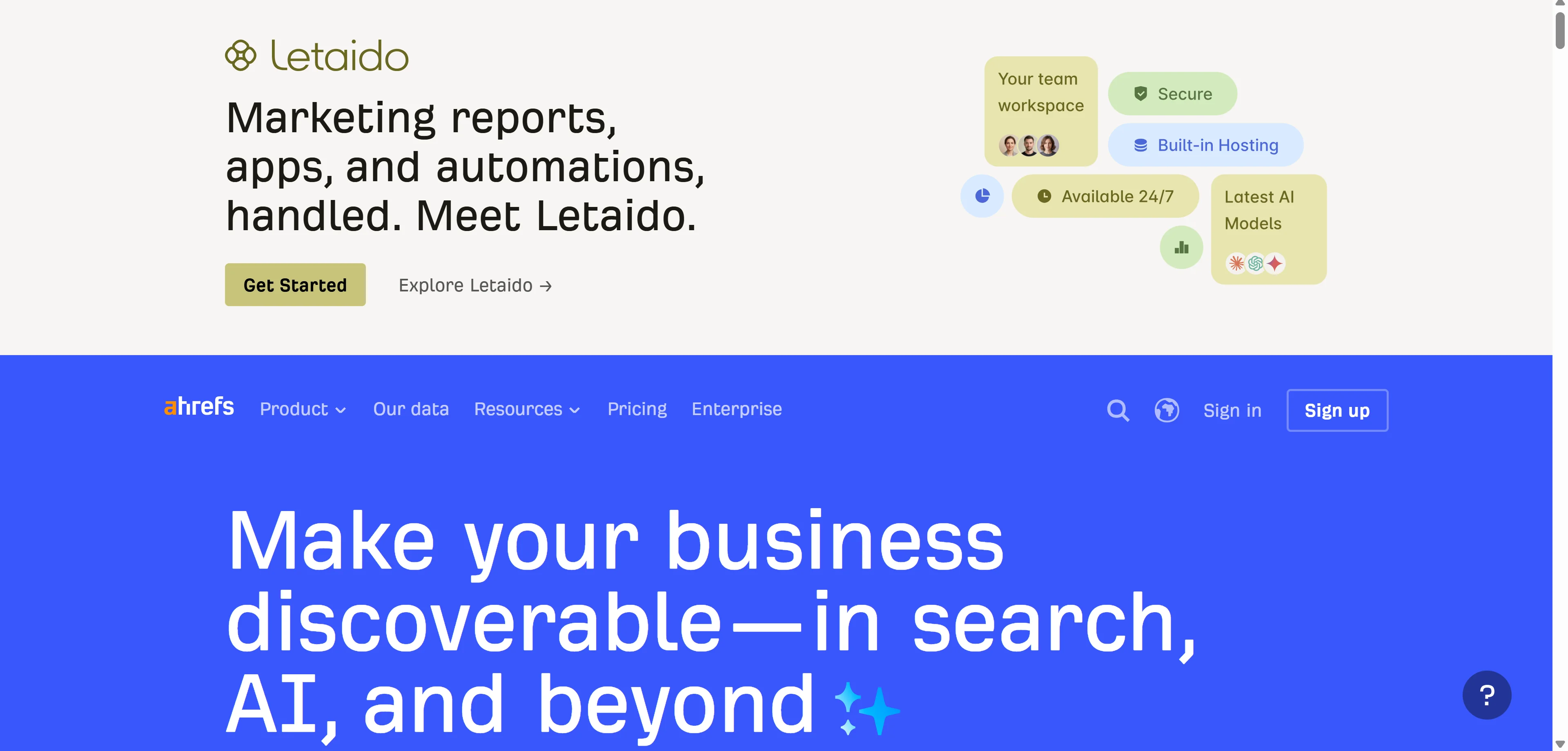
Ahrefs maintains the industry's largest backlink index at over 35 trillion links, making it the default choice when competitor link research drives your strategy.
Site Explorer reveals exactly which pages earn a competitor their traffic and which keywords drive it. Say you compete with a big finance site. You can pull their top-performing pages, spot that mortgage rates content dominates, and build your content plan around proven demand.
If link building is central to how you grow, this is the strongest single tool available, and we covered how it fits into a complete workflow in our breakdown of the best SEO tools for link builders and agencies.
 Ahrefs Pricing
Plans start at $129 monthly for the Lite tier. Standard at $249 unlocks the features most professionals actually rely on, including historical data.
Who Should NOT Use Ahrefs
Avoid it if PPC intelligence matters to your strategy, because Ahrefs barely touches paid search compared to Semrush and SpyFu. It's also the wrong pick if you want multi-channel traffic breakdowns like social and referral sources, since its estimates are built almost entirely on organic search data.
Path 2: The Budget Champions
Not everyone needs enterprise tooling. These options deliver serious value at a fraction of the cost.
SpyFu: Unmatched Value
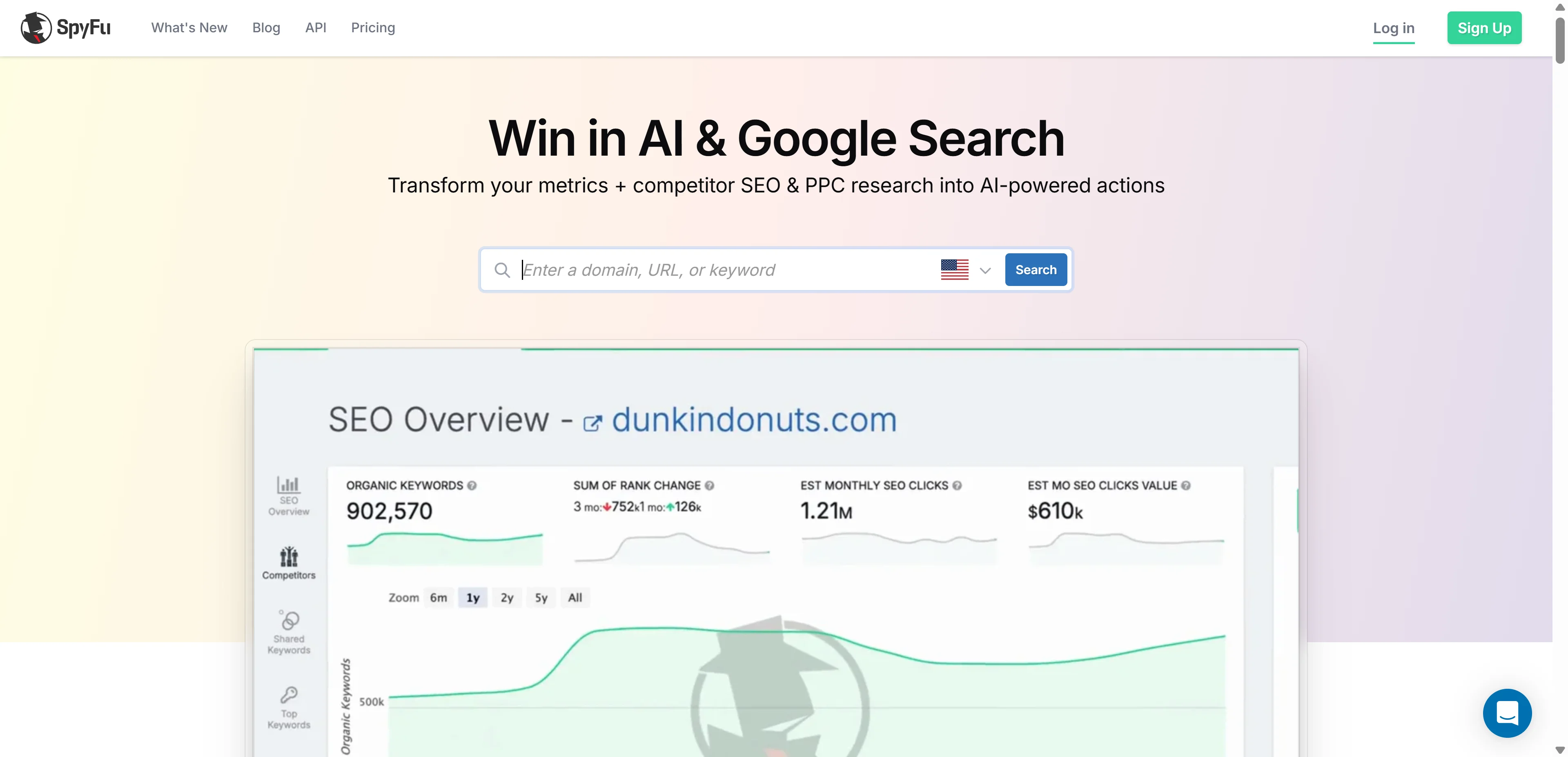
SpyFu offers the most affordable entry point in this entire category. You get competitor PPC campaigns, organic keywords, and historical ranking data going back years.
The historical depth is the sleeper feature. You can see every keyword a competitor has bought and every ad variation they've run over time, which reveals what actually worked for them versus what they abandoned.
 SpyFu Pricing
The Basic plan starts at $9 monthly with unlimited data exports, which remains the best price-to-insight ratio in the category.
Who Should NOT Use SpyFu
Skip it if your market is outside the US and UK, because SpyFu's database coverage drops sharply in other regions. It's also not the tool for backlink analysis or technical SEO audits, since neither exists in any meaningful form here.
Serpstat: The All-in-One Bargain
Serpstat bundles traffic analytics, keyword research, rank tracking, backlink analysis, and SEO audits into one budget-friendly platform with a clean, intuitive dashboard.
It won't match Semrush's database size or Ahrefs' link index. But for teams that need competent coverage across everything without a triple-digit monthly bill, it hits a genuinely useful middle ground.
 Serpstat Pricing
Plans start around $59 monthly, with the mid-tier at roughly $119 covering most small team needs.
Who Should NOT Use Serpstat
Avoid it if you're an enterprise or data-heavy agency, because the database depth runs thinner than the big two and you'll hit its ceiling on large competitive research projects. Power users who live inside keyword gap analysis all day will feel the difference within a week.
Path 3: The Agency Specialist
SE Ranking: Built for Client Work
SE Ranking holds a 4.8 out of 5 rating on G2, the highest of any tool in this comparison, and it earned that with agency-specific features the giants neglect.
The white-label functionality is the standout. Custom-branded reports, automated scheduled delivery to clients, and multi-project management from one dashboard. The hours agencies burn formatting client reports every month quietly disappear.
There's also a practical data advantage. SE Ranking's traffic analysis uses verified sources that prove more reliable for smaller and mid-sized sites, exactly the segment where SimilarWeb's panel-based estimates fall apart. For agencies serving SMB clients under that 50,000-visit threshold, this difference shows up in every report.
 SE Ranking Pricing
Plans start around $65 monthly, with agency-focused tiers including white-label features at roughly $259.
Who Should NOT Use SE Ranking
Skip it if you're an in-house team with no client reporting needs, since you'd be paying for white-label infrastructure you'll never touch. It's also not the deepest option for pure backlink research, where Ahrefs remains clearly ahead.
Path 4: The Specialized Plays
Sometimes the right competitor isn't a clone. It's a tool that does one thing SimilarWeb can't.
Exploding Topics: See Trends Before They Peak
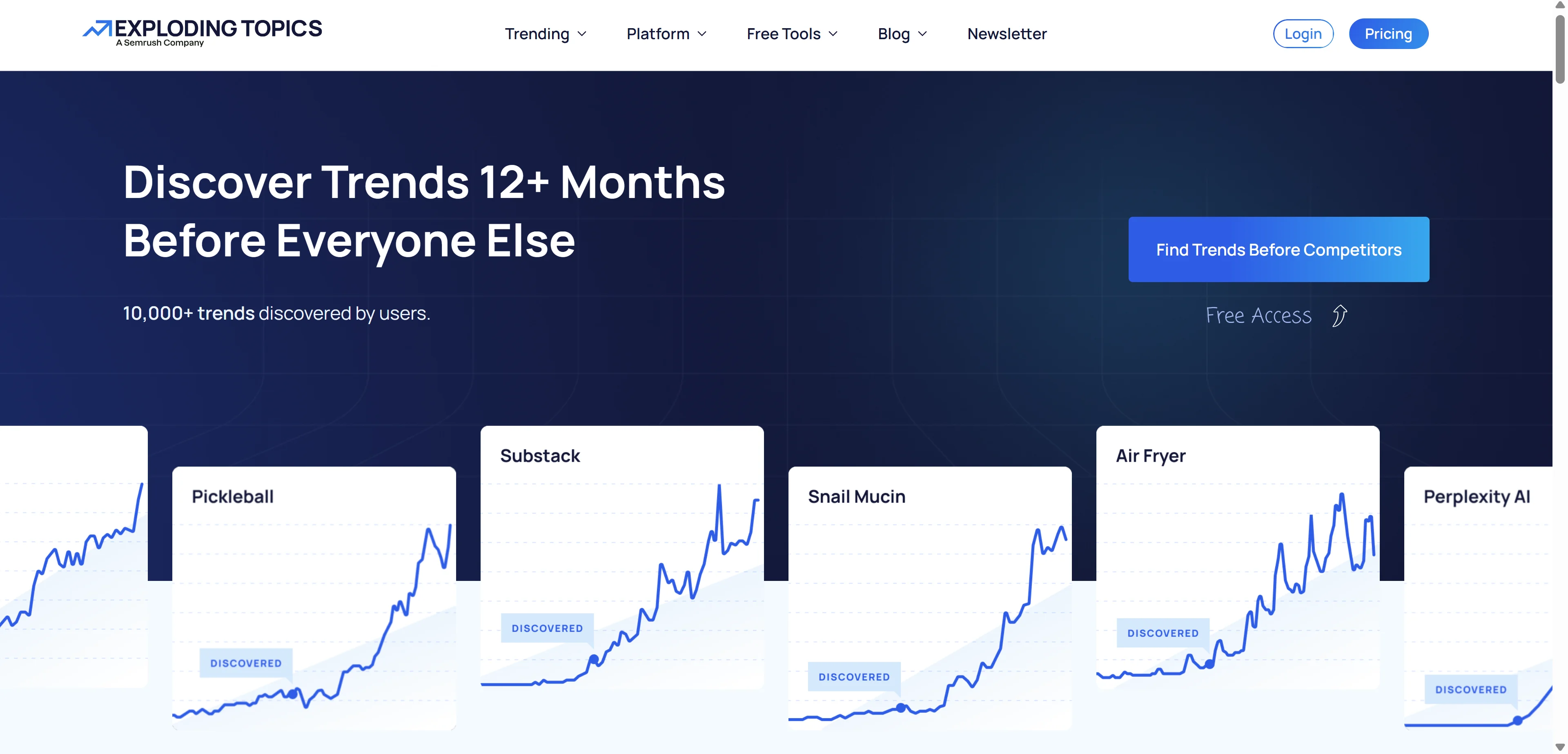
While SimilarWeb analyzes existing competitors, Exploding Topics identifies rising trends before they take off by analyzing search data, social media, and startup activity.
For content sites and product businesses, catching a trend six months early is worth more than perfectly measuring a competitor who already beat you to it.
 Exploding Topics Pricing
A free version covers basic trend browsing. Pro plans start at $39 monthly for full trend databases and alerts.
Who Should NOT Use It
Avoid it as a primary tool, full stop. It has no traffic analytics, no SEO features, and no competitor tracking. It's a complement to a stack, never the foundation of one.
Clicky: Real-Time Simplicity
Clicky delivers real-time analytics with heatmaps, session recordings, and uptime monitoring. When a campaign spikes, you see it as it happens instead of tomorrow.
 Clicky Pricing
Plans start at $9.99 monthly after a limited free tier for a single small site.
Who Should NOT Use Clicky
Skip it if competitor intelligence is your goal, because Clicky only tracks sites you own. It replaces the analytics half of your stack, never the competitive research half.
Google Analytics 4: The Free Foundation
For your own sites, nothing estimates. GA4 gives you precise, free traffic data straight from the source. Every paid tool on this list should be validated against it, and you can set it up through Google's official Analytics platform in an afternoon.
 GA4 Pricing
Completely free for virtually every business, with the paid GA360 tier only relevant at true enterprise scale.
Who Should NOT Rely on GA4 Alone
Anyone doing competitor research. GA4 sees only your own properties, so it validates your stack rather than replacing it. Privacy-focused teams also sometimes prefer Clicky or other alternatives over Google's data ecosystem.
The Accuracy Conversation Nobody Has Honestly
Here's the thing every comparison article dances around. No third-party tool is perfectly accurate. They're all estimating.
SimilarWeb tends to be more reliable for high-traffic sites and broad trends. Semrush and Ahrefs estimate based on keyword rankings, which tightens their accuracy on search-driven sites. Panel-based estimates degrade badly on niche and small sites across every platform.
The professional move is cross-checking. Pull the same competitor through two tools, compare against your own GA4 data on domains you control, and learn each tool's bias for your specific niche. Treat every number as a directional signal, never as gospel.
Pricing Comparison at a Glance
Here's every tool side by side so the budget math takes ten seconds instead of ten tabs.
Tool | Starting Price | Full-Feature Price | Free Option |
|---|---|---|---|
SimilarWeb | $199/month | $14K+/year enterprise | Limited free tier |
Semrush | $139.95/month | ~$429/month with .Trends | Limited free account |
Ahrefs | $129/month | $249/month Standard | Free webmaster tools |
SE Ranking | ~$65/month | ~$259/month agency tier | 14-day trial |
Serpstat | ~$59/month | ~$119/month | Limited free tier |
Exploding Topics | $39/month | Higher tiers available | Free trend browsing |
Clicky | $9.99/month | Higher tiers by traffic | Free for one small site |
SpyFu | $9/month | $39/month Professional | Limited free searches |
Google Analytics 4 | Free | Free | Fully free |
Stop Looking for One Tool: Build a Stack Instead
After going through all of this, here's the conclusion my founder friend landed on, and I think it's the right frame for 2026.
The single-tool era is over. The teams doing competitive intelligence well run a small stack. One source of market truth, one execution engine, and one free validation layer.
A practical example at three budget levels:
Budget | The Stack | Monthly Cost |
|---|---|---|
Lean | SpyFu + GA4 | $9 |
Growth | Semrush + GA4 + Exploding Topics | ~$180 |
Agency | SE Ranking + Ahrefs + GA4 | ~$250 |
Each stack covers observation, action, and validation. That combination beats any single $429 subscription for most teams, which is ultimately why the search for SimilarWeb competitors keeps growing.
FAQs
What is the best SimilarWeb competitor overall?
Semrush is the closest full replacement, combining traffic analytics with the deepest SEO toolkit, though the complete setup costs around $429 monthly.
What is the cheapest SimilarWeb alternative?
SpyFu at $9 per month offers competitor PPC and keyword data, while Google Analytics 4 covers your own site traffic completely free.
Is SimilarWeb data accurate?
It's reliable for high-traffic sites but estimates can miss by 40 to 70 percent on sites under 50,000 monthly visits.
Which SimilarWeb competitor is best for agencies?
SE Ranking, thanks to white-label reporting, automated client delivery, and stronger data accuracy on smaller client sites.
Can free tools replace SimilarWeb?
Partially. GA4 covers your own sites precisely, but competitor traffic estimates require a paid tool like Semrush, Ahrefs, or SpyFu.