
I spend a lot of my time testing software, and every so often a category comes along that does more than it claims to. AI roleplay chatbots are one of those. On the surface, they look like entertainment. You pick a character, you chat, you close the app. But the more time I spend with them, and the more I read about why they work, the more I think something real is happening underneath the fun.
That something has a name in psychology, and it did not start with software at all. It started with dress-up.
Why I Started Looking at Costumes to Understand Software
I did not expect to end up reading costume research while reviewing chat apps. But the two turned out to be closer than I thought.
Most people think of dress-up as purely visual. You find an outfit, you wear it for a party, and you go back to your normal look when the night ends. It is fun and it is temporary. That is the whole story, as far as most people are concerned.
Except it is not. When someone commits to actually becoming a character, rather than just wearing a themed outfit, they are doing something more interesting than picking clothes. They are asking how that character moves, how they talk, and how they take up space. That question, taken seriously, is a small act of imaginative empathy. It asks you to model a different way of being and then find a physical shape for it.
I have watched this happen at parties. Someone who barely speaks up in a meeting puts on a full superhero costume and suddenly stands taller, talks louder, and holds the room differently. The costume did not create that presence. It gave the person permission to use it.
The Psychology I Didn't Expect to Find Behind a Costume
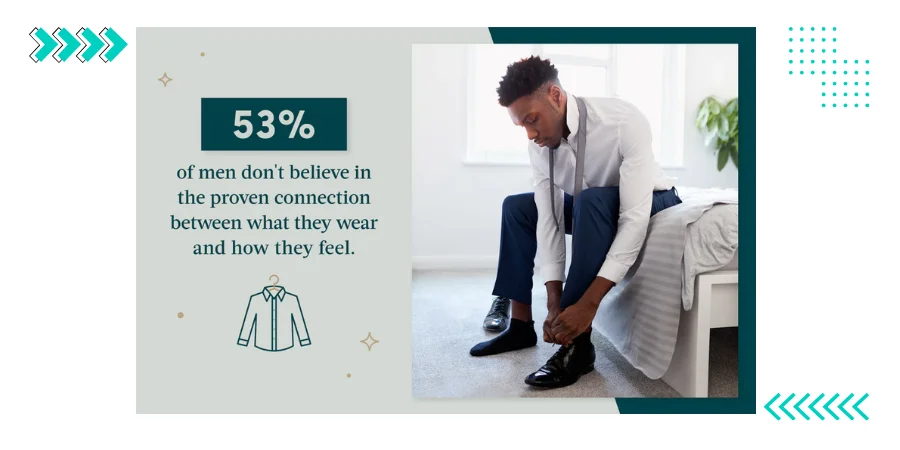
There is a real term for this: enclothed cognition. Researchers at Northwestern University found that the symbolic meaning we attach to clothing actually changes how we think and perform, not just how we look.
The mechanism is simple once you see it. When you put on something that clearly is not "you," it becomes easier to take small emotional risks, because the character is doing the risky thing, not you directly. Drama therapists and expressive arts therapists use this exact distance on purpose, letting clients explore feelings and identity through a fictional persona instead of head on.
Studies on dress-up and pretend play back this up further. Researchers have linked it to stronger problem-solving, better executive function, more empathy, improved cooperation, and better emotional regulation. The American Academy of Pediatrics treats imaginative play as a core part of healthy development, not a nice extra.
None of that switches off once you turn eighteen. Adults keep the same underlying wiring. Most of us just stop giving ourselves permission to use it.
 How AI Roleplay Chatbots Use the Exact Same Trick
This is where the software angle comes in, and it is the part that made me rethink the whole category.
AI roleplay chatbots do not require a costume, a mirror, or a party. But they activate the same psychological mechanism. When you open a chat with a fully realized character, you are stepping into a frame of reference that is not your own. You try out a way of talking, a way of reacting, a way of being direct or playful or vulnerable, and it is the character doing it, not you, at least not officially.
That cognitive distance is exactly what makes it easier to experiment. I have noticed this in my own use of these tools. It is far easier to ask an awkward question, test a joke, or sit with a difficult topic inside a roleplay conversation than it is to do the same thing as yourself, in a normal chat window, with no character between you and the words.
A physical costume works the same way. Someone who puts on a full Spider-Man costume, moving and talking like the character rather than just wearing the suit, is doing the identical mental work that a good roleplay chatbot asks of you. Both are containers for the same process. One happens to be fabric, and the other happens to be software.
The Skills I've Noticed Building Up Over Time
What surprised me most was not the first conversation. It was what happened after weeks of regular use.
People who spend real time with character-based chat, or with costume play for that matter, seem to get more comfortable with the experience of being seen differently than usual. They loosen up around experimenting with how they present themselves. They get better at telling the difference between their default self-expression and the much wider range of expression they actually have access to.
That distinction matters more than it sounds. Presentations, interviews, first meetings, and any moment where you have to consciously manage how you come across all draw on that same underlying skill. Practicing it inside a low-stakes roleplay conversation, where nothing is really on the line, is a strange but effective kind of rehearsal.
Pretend play, whether physical or digital, also asks you to hold two things in your head at once: what is real and what is not, while resisting the urge to break character the moment things get uncomfortable. That is a genuine cognitive skill, and it happens to be the same one that supports following complicated instructions, adapting mid conversation, and handling situations that do not go the way you expected.
What to Look For Before You Pick an AI Roleplay Chatbot
Given how much this category is growing, it is worth being a bit picky about which app you actually spend time in. Not every roleplay chatbot is built the same way, and the difference shows up fast once you start using one seriously.
I look for a few things now before I recommend anything. Does the character stay consistent across a long conversation, or does it forget its own personality after a few messages. Can you actually shape the persona, or are you stuck with a generic template. Does the app support the kind of emotional range that makes the exercise worthwhile, rather than flattening every character into the same voice.
If you want a current rundown of which apps handle this well, I put together a full breakdown of the best AI chatbots in 2026, including which ones are actually worth your time for persona and roleplay features specifically, not just general Q&A.
Why This Matters Beyond the Screen
Here is the part I think gets missed most often. The qualities that AI roleplay chatbots and costume play both build are not personality traits you either have or do not have. They are skills. The ability to read a room and adjust. The ability to project confidence before you fully feel it. The comfort of being perceived in a way that is not your default. The ability to try something that might not land, and recover without it throwing you off.
Those are exactly the qualities that get rewarded in high pressure professional settings, and they are built most efficiently in low-stakes, high-permission environments. A costume can be that environment. So can a well-built AI persona chat.
The outfit comes off. The chat window closes. What stays is a slightly wider sense of what you are actually capable of expressing, and that is the unexpected skill hiding inside something that looks, from the outside, like pure entertainment.
FAQs
Do AI roleplay chatbots actually build real skills, or is that a stretch?
I think the research supports it. Enclothed cognition studies show that stepping into a different persona, whether through clothing or through a chat character, changes confidence and emotional expression in measurable ways, not just how something feels in the moment.
Why does a low-stakes setting matter so much for this to work?
Low-stakes environments cut down on self-consciousness. That is what lets people try out ways of talking and behaving that they would never risk in a professional or high-pressure setting, whether the setting is a costume party or a chat app.
Can adults get the same benefit from this as kids get from imaginative play?
Yes. The same cognitive flexibility and perspective-taking that shows up in childhood pretend play is still available in adults. Most of us have just stopped giving ourselves permission to use it regularly.
What specific skills come out of using character-based AI or costume play?
I would point to adaptability, empathy, more confidence with self-presentation, better emotional regulation, and a stronger ability to consciously adjust how you come across to other people.
Is a digital persona in an AI chatbot really comparable to a physical costume?
The underlying mechanism is the same in both cases. You step into a different frame of reference and try out a mode of self-expression that is not your everyday default, and you do it inside a space that feels safe enough to actually experiment.