
A small business owner I know searched "WebSolutions LLC reviews" before signing a contract, assuming she'd find one specific company's track record. Instead she found at least five completely unrelated businesses using variations of that exact name, an IT repair shop, a bookkeeping firm, and several separate web design agencies with zero connection to each other.
That confusion is worth understanding before you hire anyone with a generic-sounding "WebSolutions" style name. Here's how to actually vet a web services provider properly, regardless of what they call themselves.
Why Generic Business Names Make Due Diligence Genuinely Hard
Names like WebSolutions, WebDesign, or TheWebsite combined with LLC are extremely common in this industry precisely because they sound professional and searchable. The problem is that genericness works against you as a buyer. When you search for reviews, you can't tell which of several unrelated companies you're actually looking at.
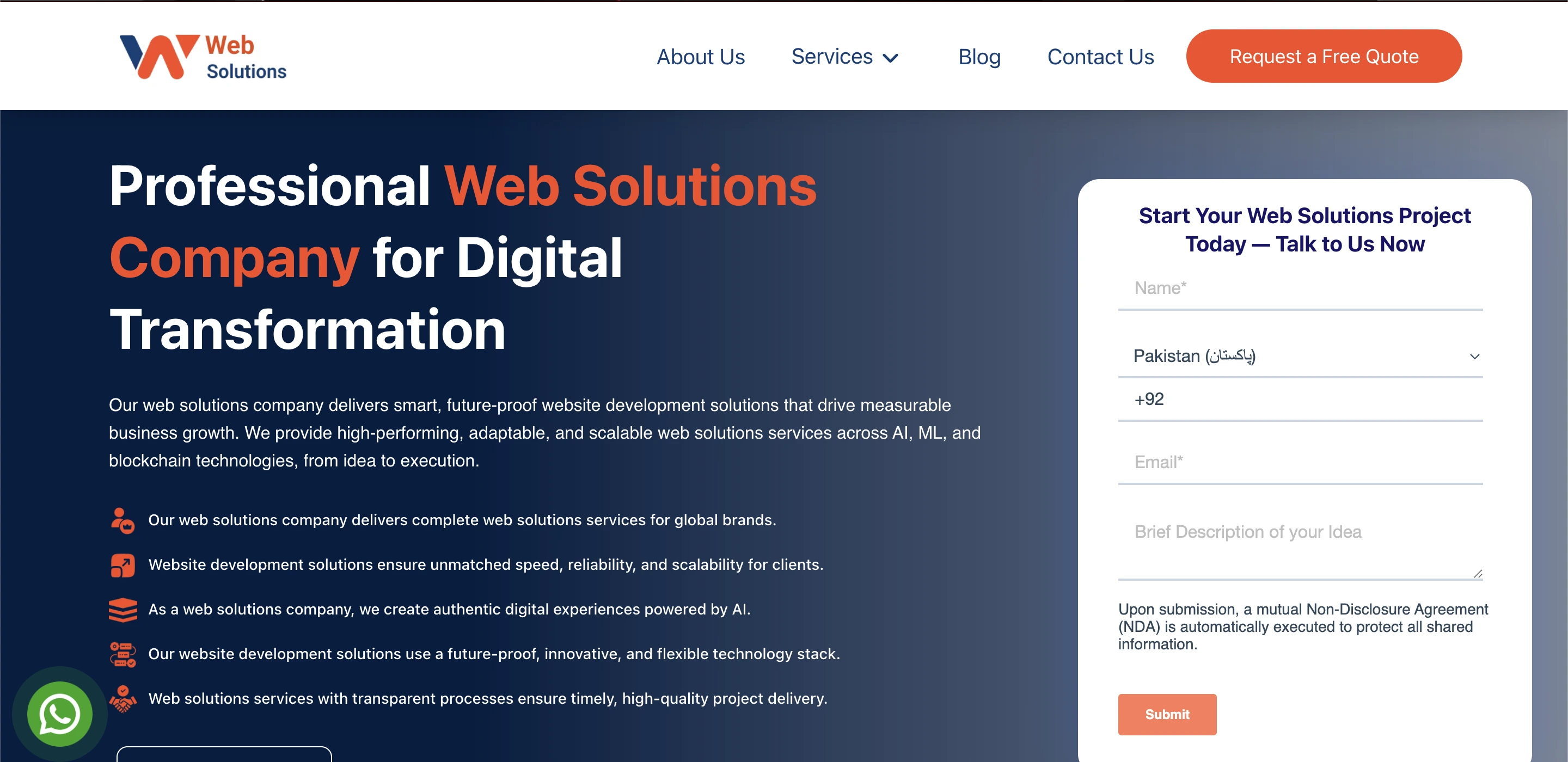
I found this exact pattern researching this specific name. A Maryland-based WebSolutions LLC turned out to be primarily a computer repair and antivirus support business, not a web design agency at all. A separate Tacoma firm called Web Trending Solutions LLC does bookkeeping, payroll, and tax prep alongside website work. Others use nearly identical marketing language, "cutting-edge digital concepts," "tailored solutions," "client-centered approach," phrases so generic they could describe literally any agency in this space.
That's the first red flag worth internalizing. If you can't find a specific, verifiable address, founder name, or portfolio tied clearly to one company, you're not actually evaluating a business, you're evaluating marketing copy.
 What to Actually Check Before Hiring Any Web Provider
Verify a Real, Specific Identity
Look for a named founder or leadership team, a physical business address you can independently verify, and a portfolio of actual, checkable client websites, not just stock screenshots or vague descriptions. If a company's own site can't tell you who runs it or where it's actually based, that's worth pausing on before signing anything.
Check Independent Review Platforms Directly
Don't rely on testimonials posted on the company's own website. Check the Better Business Bureau, Trustpilot, and Google Business reviews directly, and pay attention to how a company responds to negative reviews specifically. A business that engages thoughtfully with criticism tends to be more trustworthy than one with only glowing, generic five-star reviews and no visible pushback ever addressed.
The same principle applies when researching financial service providers and online account portals—for example, this guide on Aidvantage login and account access shows why using reliable, clearly identified resources matters when dealing with important services.
Ask for Specific, Checkable Client Examples
A legitimate web services provider should be able to point you to live, current websites they've actually built, ideally ones you can independently contact the client about. Vague claims of "helping businesses grow their online presence" without a single verifiable example is a real warning sign.
Red Flags Worth Taking Seriously
Generic, interchangeable marketing language that could apply to any company in the industry without a single specific detail is the clearest early signal. Phrases like "client-centered approach," "scalable solutions," and "practical web design" sound reassuring but tell you nothing concrete about actual capability or track record.
No verifiable business address or an address that doesn't match the company's claimed location is another real concern. So is a total absence of independent reviews outside the company's own website, or reviews that all read suspiciously similar in tone and structure, a pattern that often points toward fabricated or incentivized testimonials rather than genuine client feedback.
What Legitimate Web Services Providers Actually Deliver
Regardless of company name, here's what a genuinely capable provider should offer clearly and specifically.
Website development built around your actual business needs rather than a templated one-size-fits-all approach, with clean layouts, working navigation, and stable performance across devices. Ongoing maintenance and support, including updates, backups, and monitoring, since a website is never really "finished" once launched.
Performance optimization covering page load speed and structure, genuinely important for both user experience and search visibility. SEO-friendly foundations, meaning proper page organization and clean URL structures, though be skeptical of any provider promising guaranteed rankings, since no legitimate agency can honestly guarantee where you'll land in search results.
Small Business vs Enterprise: Matching the Provider to Your Actual Needs
Smaller agencies and freelance-adjacent LLCs tend to work well for straightforward business websites, service pages, contact information, basic branding, delivered without the overhead of a large agency. Larger, more established firms make more sense for complex platforms requiring custom development, heavy e-commerce infrastructure, or ongoing technical work beyond what a two or three-person team can realistically support.
Understand which category your actual project falls into before evaluating providers, since a company built for simple small business sites may struggle with complex requirements, and an enterprise-focused agency may be genuinely overkill and overpriced for a straightforward five-page business website.
Web Services Providers vs In-House Teams
Factor | Outsourced Provider | In-House Team |
|---|---|---|
Cost structure | Flexible, project-based | Fixed salaries, benefits, ongoing overhead |
Expertise range | Access to varied specialists | Limited to hired staff's specific skills |
Scalability | Easy to adjust project scope | Requires hiring or restructuring |
Turnaround | Often faster, ready-to-deploy | Slower, involves onboarding |
Long-term commitment | No permanent staffing obligation | Ongoing employment commitment |
Most small businesses genuinely benefit from outsourcing, since the fixed cost of an in-house web team rarely makes sense until a company reaches meaningful scale.
Questions Worth Asking Directly in Your First Conversation
Ask to see three specific, live websites the company has built, and ask if you can contact those clients directly. Ask exactly what ongoing maintenance costs after launch, since that's where vague pricing often hides real long-term expense. Ask who specifically will work on your project, since some providers subcontract work out without disclosing that upfront.
And ask directly what happens if the relationship ends, whether you retain full ownership and access to your website's code and hosting, or whether you'd be locked into that specific provider indefinitely to make any future changes.
Verifying Business Legitimacy Directly
For US-based companies specifically, checking a business's standing directly through your state's Secretary of State business registry confirms whether an LLC is actually registered and in good standing, a step that takes minutes and immediately separates a real, accountable business from marketing copy with no legal entity clearly behind it.
The Better Business Bureau's official business search is also a genuinely useful independent starting point, letting you check complaint history and accreditation status directly rather than relying solely on a company's self-reported reputation.
How This Same Verification Habit Applies Elsewhere
This exact pattern, a generic, trustworthy-sounding name attached to content or a business you can't fully verify, shows up constantly across other categories too, not just web design. We covered a structurally similar situation in our piece on CNLawBlog, where a name closely associated with a credentialed legal publication also attracted a wave of unrelated, unverifiable content using the same or similar branding. The underlying lesson is identical regardless of industry: verify the specific entity behind a name before trusting it with something that matters.
My Honest Take
If you're evaluating any company calling itself some variation of WebSolutions, WebDesign, or similar generic branding, don't stop at the marketing page. Find the specific, verifiable business behind the name, check independent reviews, confirm a real address and registration, and ask for checkable client examples before signing anything.
A genuinely good web services provider will welcome that scrutiny. One relying purely on generic language and unverifiable claims is exactly the profile worth walking away from, regardless of how professional the website itself looks.
FAQs
How do I know if a web design company is legitimate?
Verify a real business address, check independent reviews on platforms like BBB or Trustpilot, and confirm registration through your state's business registry.
Why are there multiple different companies called WebSolutions LLC?
Generic, professional-sounding names are extremely common in the web services industry, which makes it genuinely difficult to distinguish between unrelated businesses using similar names.
Should I trust testimonials on a web design company's own website?
Treat them as a starting point only, and verify reputation through independent review platforms the company doesn't control directly.
What should I ask before hiring a web solutions provider?
Ask for specific, contactable client examples, clear maintenance pricing, who will actually work on your project, and what happens to your site's ownership if the relationship ends.
Can a web design company guarantee search engine rankings?
No legitimate provider can honestly guarantee specific rankings. Be skeptical of any company that makes that promise directly.