
A Spanish teacher I know has been assigning Conjuguemos homework since before some of her current students were born, the platform has quietly been around since 2000. What surprised me looking into it properly is how specific and reasonable the actual pricing is, information that's genuinely hard to find summarized clearly anywhere else.
Here's the complete, accurate picture of what Conjuguemos offers, what it costs at each tier, and who actually benefits from using it.
What Conjuguemos Actually Is
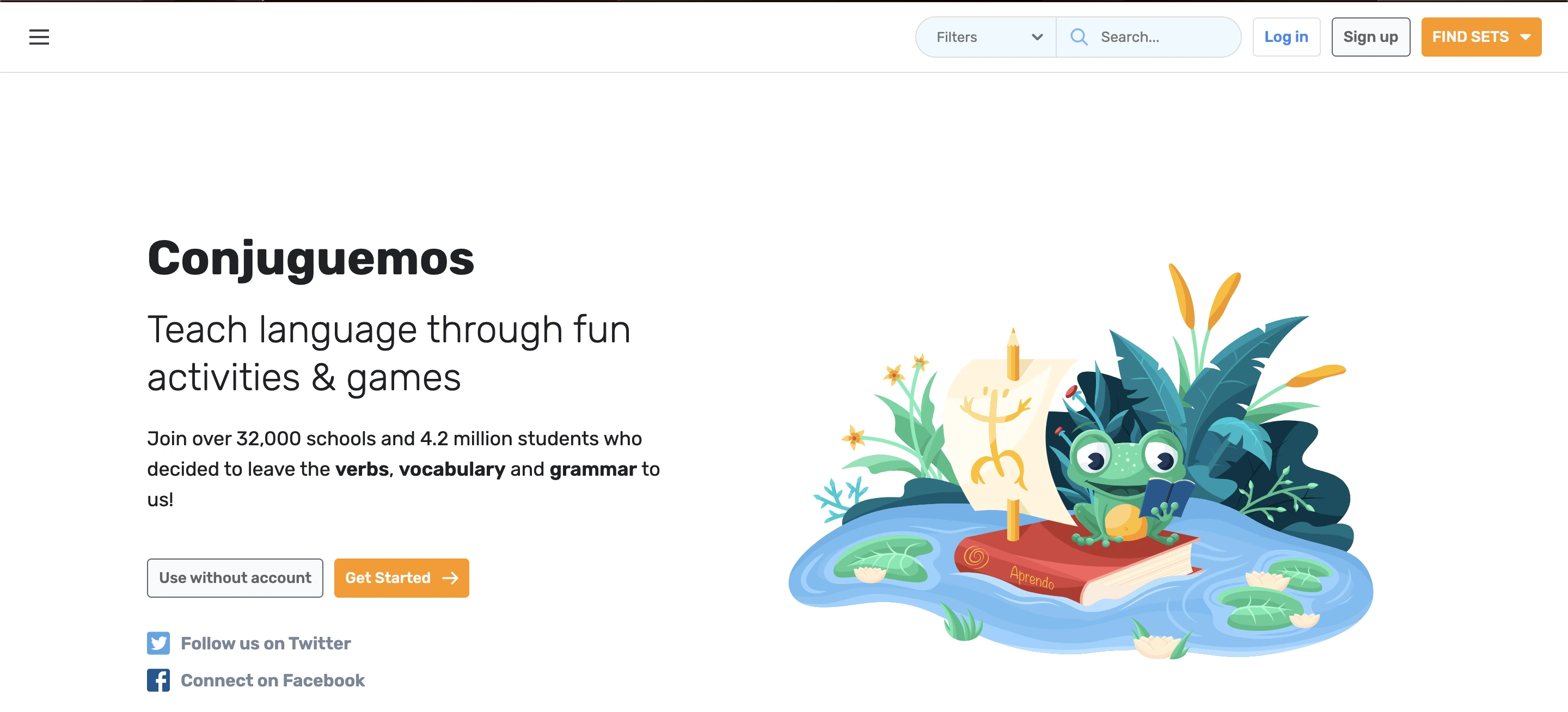
Conjuguemos is a cloud-based educational platform delivering interactive, standards-aligned practice in world languages, run by Yegros Educational LLC, founded by Alejandro Yegros. It's been operating continuously since 2000, which is genuinely rare longevity in the edtech space, and it's based in Newton, Massachusetts, a real, verifiable company rather than an anonymous platform.
The platform supports vocabulary, grammar, and verb conjugation activities across Spanish, French, German, Italian, Portuguese, Swedish, Korean, and Latin, considerably broader language coverage than the Spanish-and-French framing most people associate it with.
 How It Actually Works
Teachers create accounts to build and assign language activities, monitor student progress, and access data-driven insights into performance. Students create individual accounts, or get automatically rostered through integrations with Google Classroom or ClassLink, to access assigned activities and receive automated grading and feedback.
All student work is stored securely and is only accessible by the respective student and their authorized teachers, a real privacy detail worth knowing for schools evaluating data handling before adopting any classroom tool.
The Actual Pricing Structure
Here's where I want to give you real numbers rather than the vague "depends on your school" answer most coverage settles for.
Account Type | Price | What You Get |
|---|---|---|
Student | Free | Unlimited access to public activities, games, printables, unlimited grade recording |
Individual Teacher Free | $0/year | Unlimited public activities, but capped at 5 teacher-created activities and 25 stored grades |
Individual Teacher Premium | $45/year | Unlimited teacher-created activities, unlimited stored grades, full access |
School or District | Custom | All Premium features plus unlimited sharing between colleagues |
Students never pay regardless of tier, which is worth knowing upfront. The entire cost structure sits on the teacher and institution side, and $45 a year for a full-featured individual teacher account is genuinely inexpensive compared to most classroom software subscriptions charging per student or per month.
Key Features Worth Knowing
Verb conjugation practice remains the platform's core strength, with learners working through different tenses, moods, and subject forms through repeated exercises across all supported languages. Grammar exercises cover sentence structure, agreement, and usage rules beyond just verbs specifically.
Vocabulary activities let students practice word meanings and usage, complementing the grammar and verb work. Instant feedback tells students immediately whether an answer is right or wrong, letting them correct mistakes without waiting for a graded assignment to come back days later.
Teacher assignment tools let educators create custom assignments, set deadlines, and monitor performance from one dashboard. Progress tracking shows scores and completion status automatically, saving teachers from manual grading entirely.
The Feature Most Reviews Skip: Multiplayer Games and Coqui
Here's something worth knowing that most coverage of this platform completely misses. Conjuguemos includes multiplayer verb games where students can compete with friends directly, a genuinely different engagement model than the pure repetition-drill framing the platform sometimes gets reduced to.
There's also a named analytics feature called Coqui that continuously learns about student performance and surfaces useful insights for teachers over time, essentially an ongoing pattern-recognition layer sitting on top of the raw grade data. If you're evaluating this platform based purely on older descriptions, know that the analytics side has genuinely developed beyond simple score tracking.
Use Cases Where This Genuinely Helps
Classroom Reinforcement
Teachers assign exercises directly matching what's being taught in class, letting students reinforce specific tenses or grammar rules right after the lesson rather than losing that context by the time homework happens days later.
Homework Without Extra Materials
Students complete assignments from home using any device with a browser, with automatic feedback meaning they understand mistakes immediately rather than discovering them when a graded paper comes back.
Independent Practice Outside Class
Learners can repeat exercises as many times as needed, useful for reinforcing rules that felt confusing during the actual lesson, without needing to wait for the next class session to ask again.
Exam Revision
The structured, repeatable exercise format makes focused review genuinely efficient before a quiz or test, letting students identify and target their specific weak areas rather than reviewing everything equally.
Who Should Actually Use Conjuguemos
Middle and high school language teachers wanting organized, low-cost practice tools get real value here, especially given how inexpensive the $45 annual Premium tier is relative to comparable classroom software. Students genuinely struggling with verb tenses specifically benefit from the repetition-and-instant-feedback model more than they would from passive textbook review.
Who Should Look Elsewhere
If speaking and listening practice are your primary goal, this platform won't cover that need, it's built almost entirely around written practice. Learners wanting full conversational immersion or pronunciation coaching need a different tool entirely, since Conjuguemos was never designed to replace that side of language acquisition. Teachers looking to fill that specific gap sometimes turn to AI-generated video content to supplement listening and pronunciation practice. Our piece on VideoExpress AI covers one such tool, useful context if you're building a fuller language curriculum around Conjuguemos's written practice.
Honest Limitations Worth Knowing
The platform mainly focuses on written practice and does not strongly emphasize speaking or listening skills, both genuinely important components of full language learning that you'll need to supplement elsewhere. Some learners may also find repetitive exercises less engaging over time, and how motivating the platform feels depends heavily on how thoughtfully a teacher integrates it into actual lessons rather than just assigning it as isolated busywork.
Comparison With Traditional Learning Methods
Aspect | Conjuguemos | Traditional Methods |
|---|---|---|
Feedback speed | Instant | Delayed until manually checked |
Practice frequency | Encourages regular short sessions | Depends on homework schedule |
Teacher workload | Automatic grading | Manual checking required |
Progress tracking | Automatic | Mostly manual |
Learning pace | Self-paced | Fixed for the whole class |
Access | Anywhere with a browser | Requires physical books or class time |
Is It Safe and Reliable
Conjuguemos is designed specifically for students and teachers, not commercial or entertainment purposes, and user accounts are typically managed by teachers or institutions, which adds a real layer of structure and oversight. Since the platform focuses purely on learning activities without unrelated content mixed in, it remains genuinely suitable for academic use across age groups.
For language education standards more broadly, ACTFL, the American Council on the Teaching of Foreign Languages, is the recognized authority on proficiency standards that platforms like this position themselves as aligning with, worth checking directly if standards alignment specifically matters for your curriculum decisions.
Comparing This to Other Classroom Assignment Tools
If you're evaluating multiple classroom platforms that assign work, track completion, and grade automatically, it's worth understanding how the login and assignment structure compares across different subjects, not just language learning specifically. Our guide to Formative student login covers a broader classroom assessment platform with a similar teacher-assigns, student-completes, progress-tracked model, useful comparison if your school is standardizing on assignment tools across multiple subjects rather than evaluating each one in isolation.
Final Thoughts
Conjuguemos is a genuinely practical, long-running platform focused specifically on verb conjugation, grammar, and vocabulary practice, with a pricing structure that's remarkably accessible, free for students always, and just $45 a year for a fully-featured individual teacher account. Its strength lies in repetition, instant feedback, and structured practice rather than trying to be a complete language immersion solution.
Used consistently and alongside actual classroom instruction covering speaking and listening, it's a solid, low-cost tool that's clearly earned its two-decade track record rather than being another edtech platform that'll disappear in a few years.
FAQs
Is Conjuguemos actually free?
Students always use it free. Teachers get a free tier capped at 5 activities and 25 stored grades, with unlimited access available for $45 per year on the Premium plan.
Which languages does Conjuguemos support?
Spanish, French, German, Italian, Portuguese, Swedish, Korean, and Latin, with Spanish and French having the deepest content coverage.
Can Conjuguemos replace a language teacher?
No, it's a practice tool supporting instruction, not a replacement for teaching, conversation practice, or speaking and listening skill development.
Does Conjuguemos integrate with Google Classroom?
Yes, students can be automatically rostered through integrations with Google Classroom or ClassLink rather than manually creating separate accounts.
Is Conjuguemos suitable for beginners?
Yes, beginners can start with basic verb forms and progress to advanced tenses and moods as their skills develop.