
An HR director I know spent six months evaluating UltiPro replacements for her 800-person company. Halfway through, she discovered something that changed her entire search. UltiPro doesn't technically exist anymore.
That confusion is exactly where this guide starts, because you can't compare competitors to a product you misunderstand. Here's the full picture, including the parts other comparison articles conveniently skip.
First Things First: UltiPro Is Now UKG Pro
Before comparing anything, let's clear up the name situation that confuses almost every searcher.
UltiPro and Kronos merged in 2020 to form UKG, the Ultimate Kronos Group. UltiPro became UKG Pro, the company's flagship HCM suite. The core payroll, HR, and talent management capabilities carried forward, which is why many organizations still informally call it UltiPro.
So when you search for UltiPro competitors, you're really evaluating UKG Pro competitors. The current version includes AI-driven insights through Bryte AI, global workforce management, and real-time scheduling that the old UltiPro never had.
UKG Pro is built for mid-sized and enterprise organizations with complex payroll and HR requirements. That positioning is exactly why so many companies go looking for alternatives. Not every business needs enterprise-level machinery.
Why Companies Look for UltiPro Alternatives
The reasons follow a consistent pattern across user reviews and analyst reports.
Complaint | The Reality |
|---|---|
Complexity | Setup required building performance reviews and competencies from scratch with no templates |
Cost | Enterprise pricing requires custom quotes and long implementation budgets |
Overkill for smaller teams | Many solutions bundled under one umbrella when you only need a few |
Training burden | Users unwilling to invest in serious training struggle with the platform |
Slow performance | Reviewers report the system sometimes runs slow or stagnant |
None of these make UKG Pro a bad product. They make it the wrong product for specific situations, which is what the rest of this guide sorts out.
The Competitors, Organized by Company Size
Most comparison articles dump ten tools in a random list. HCM platforms actually segment by workforce size, so that's how I've organized this.
Enterprise Tier: 1,000+ Employees
Workday HCM
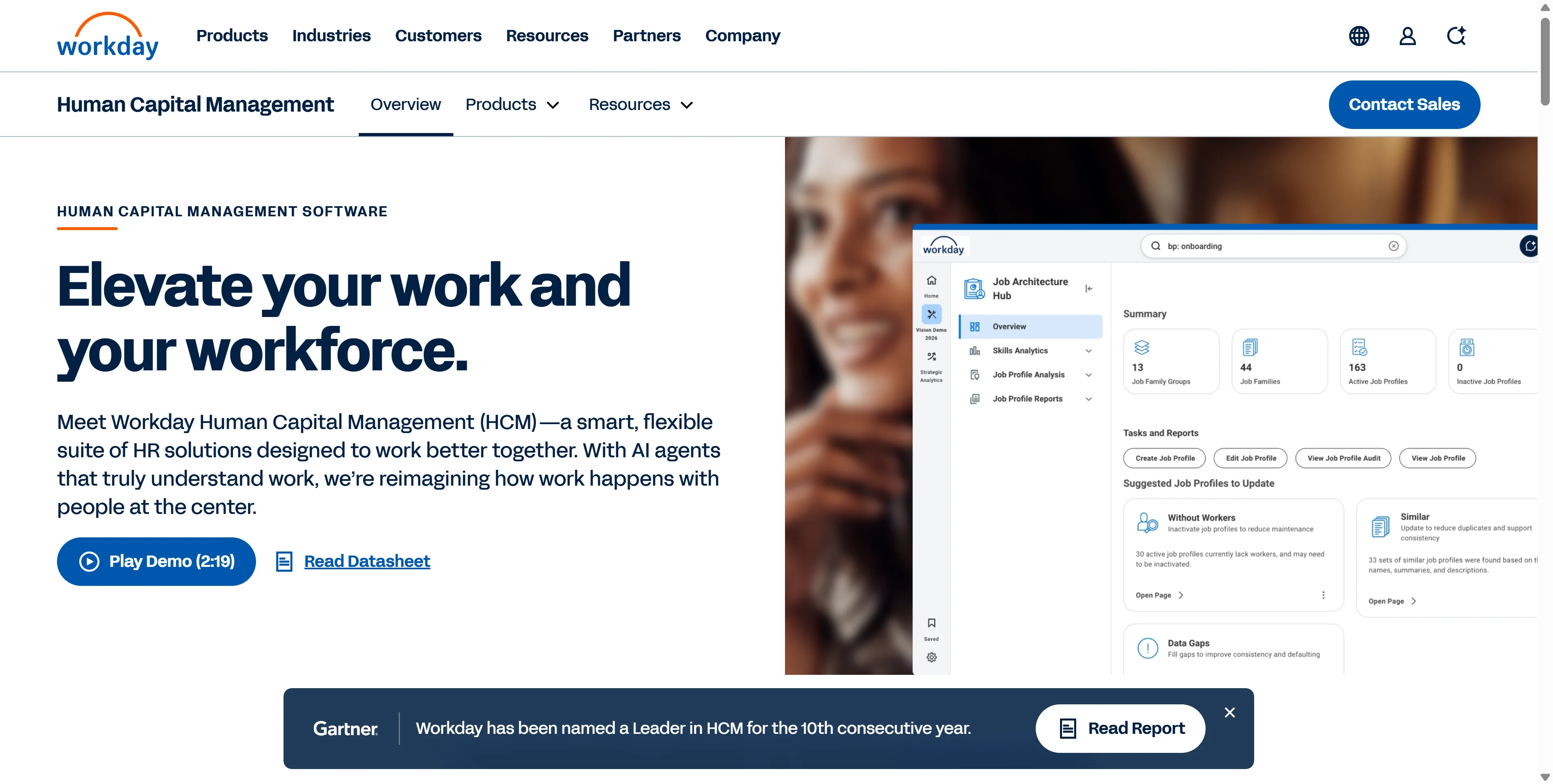
Workday is the name that comes up in every enterprise UKG evaluation, and for good reason. It provides deeper analytics, stronger financial and operational integrations, and a unified system for HR, payroll, talent, learning, and workforce strategy.
The Workday AI layer leverages over 600 billion transactions to power its insights, and the platform's continuous innovation approach means frequent updates rather than annual releases.
 Pricing: Custom quotes only, typically the most expensive option in this list.
Who should NOT use Workday: Companies under 500 employees, full stop. The implementation costs and timeline are built for enterprises, and smaller teams end up paying for planning tools they'll never open. Also skip it if you need fast deployment, because Workday implementations routinely run 6 to 18 months.
Dayforce
Dayforce, formerly Ceridian, runs everything through a single application with one flexible rules engine and real-time calculations. That single-database architecture means payroll, HR, benefits, and workforce management never fall out of sync.
The real-time calculation engine is genuinely differentiated. Payroll previews update continuously instead of at batch processing time, which eliminates the end-of-cycle surprises common on older platforms.
Pricing: Custom quotes based on modules and headcount.
Who should NOT use Dayforce: Companies without complex regulatory or multi-jurisdiction payroll needs. The rules engine is the whole point, and simple payroll situations pay for sophistication they don't use. HR teams wanting a gentle interface should also look elsewhere, since the depth comes with density.
SAP SuccessFactors and Oracle HCM
Both deserve a mention for global enterprises. SAP SuccessFactors holds a 4.1 rating on G2 and offers extensive global compliance and localization support, making it strong for multinationals. Oracle HCM competes in the same bracket with deep ERP integration.
Who should NOT use them: Anyone who isn't already inside the SAP or Oracle ecosystem. The value depends heavily on integration with their broader suites, and standalone adoption brings enterprise complexity without the ecosystem payoff.
Mid-Market Tier: 100 to 1,000 Employees
This is where most UltiPro refugees actually land, because it's the segment UKG Pro overserves.
Paycom: The Highest-Rated Alternative
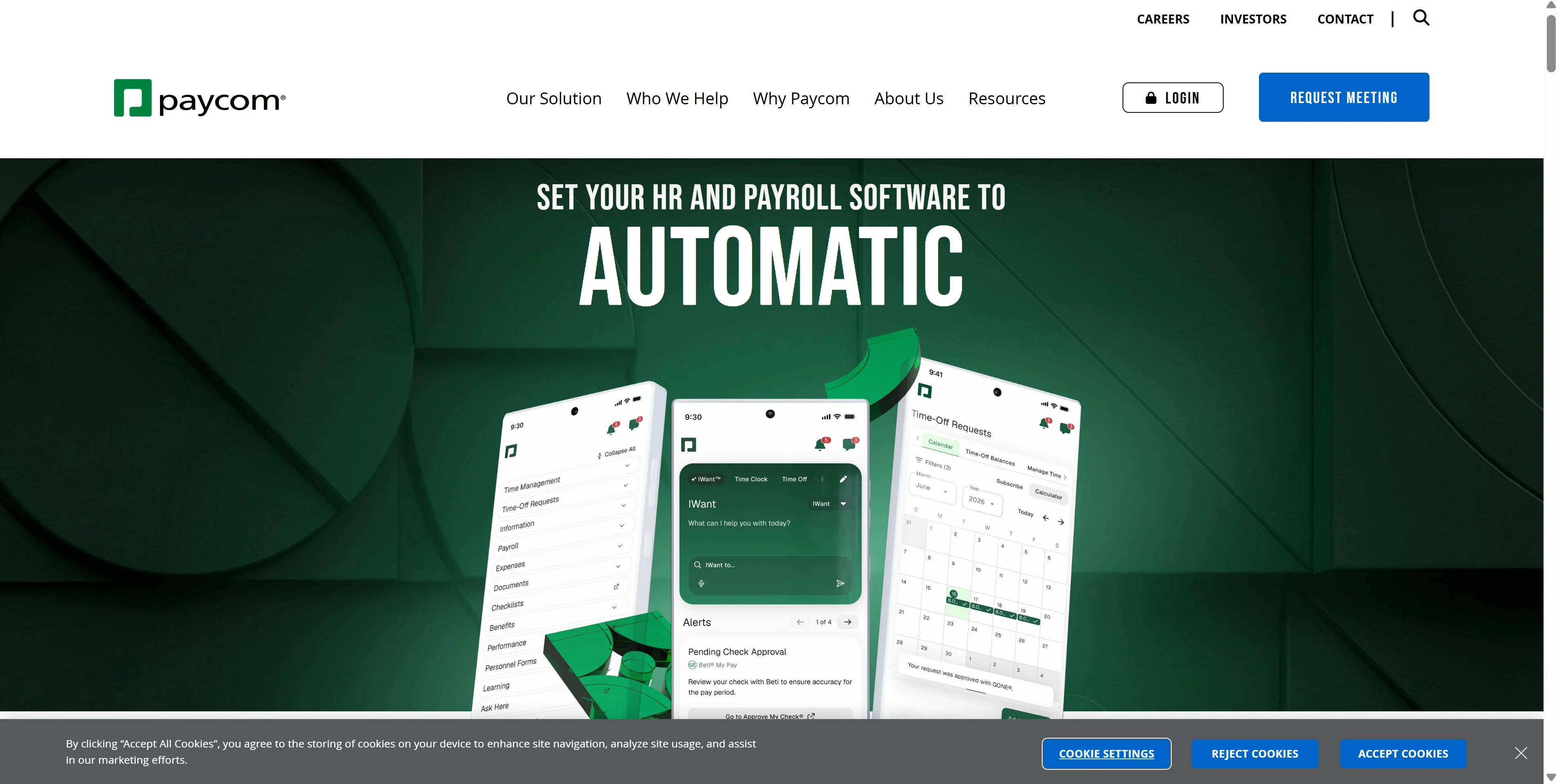
Paycom is rated around 4.5 stars on G2 from over 4,300 reviewers, the best overall rating among UKG Pro alternatives. It runs on a single-database, end-to-end architecture covering talent acquisition, time and labor, payroll, and HR management in one application.
The standout philosophy is employee self-service taken to its logical end. Employees manage their own data, which cuts HR administrative load dramatically.
 Pricing: Custom quotes, generally more accessible than enterprise-tier platforms.
Who should NOT use Paycom: Organizations wanting heavy customization of workflows, since the single-application design trades flexibility for consistency. International companies should also pause, because Paycom's strength is firmly US-centric payroll.
Paylocity: The Engagement-Focused Pick
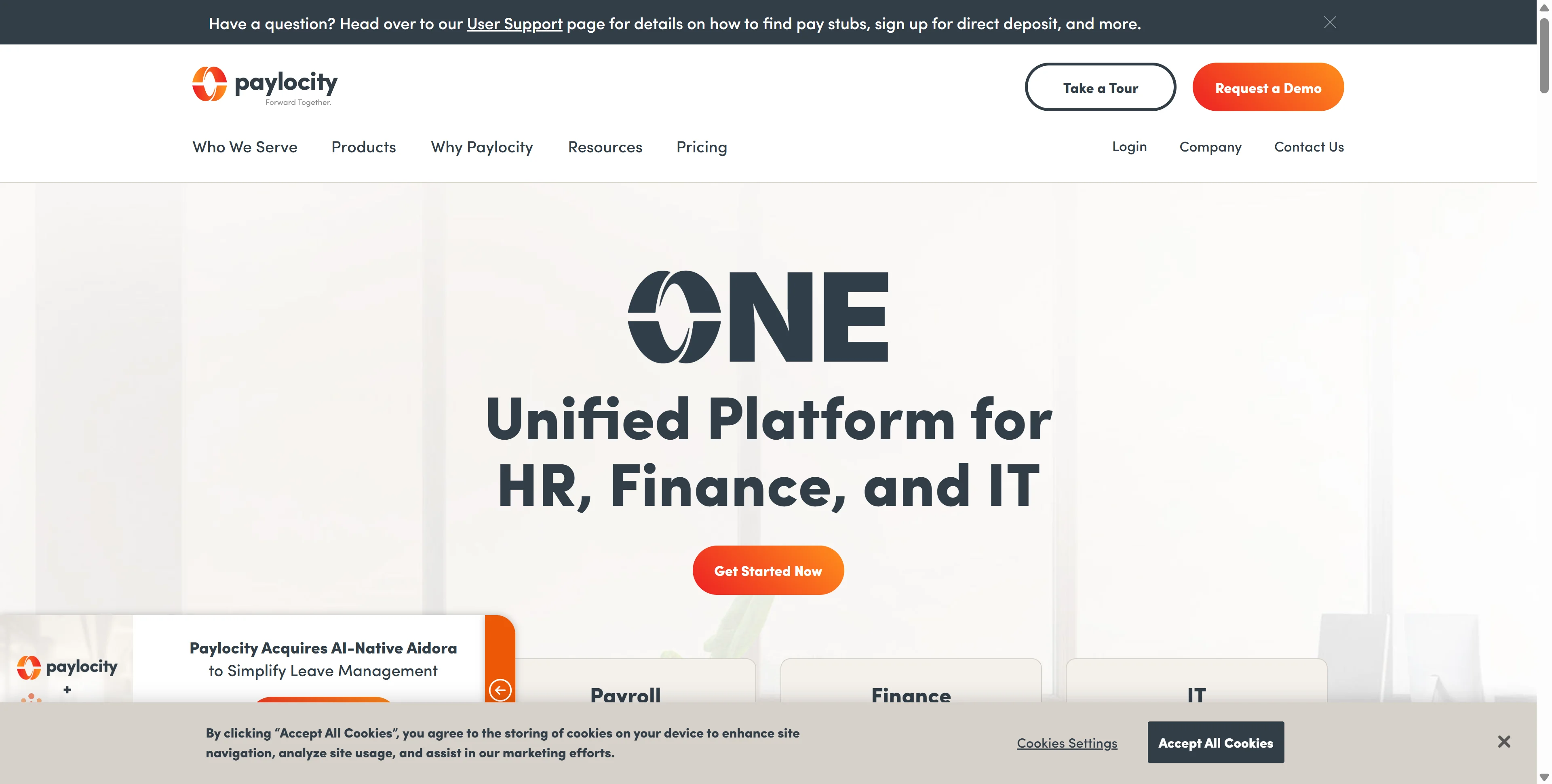
Paylocity holds a 4.4 G2 rating and consistently earns praise for customer support. It bundles payroll, benefits, talent, and workforce management with modern communication tools built in, including social-style feeds and surveys.
For companies where culture and employee engagement sit high on the priority list, the built-in community features genuinely differentiate it from spreadsheet-feeling competitors.
If employee benefits specifically are the gap you're trying to fill rather than a full HCM suite, ThrivePass is worth a look it handles wellness stipends, pre-tax benefits, FSA, HSA, and employee rewards all in one dedicated platform.
 Pricing: Custom quotes, mid-market friendly.
Who should NOT use Paylocity: Companies that view HR software purely as a compliance and payroll engine. You'd be paying for engagement features that go unused. Enterprises with complex global needs will also outgrow it.
Rippling: The Modern All-in-One
Rippling combines HR, IT, payroll, and spend management in one platform, which no traditional HCM does. Onboarding a new hire can automatically provision their laptop, software accounts, and payroll in one workflow.
That IT integration is the genuine differentiator. For companies managing devices and app access alongside people, the consolidation is real.
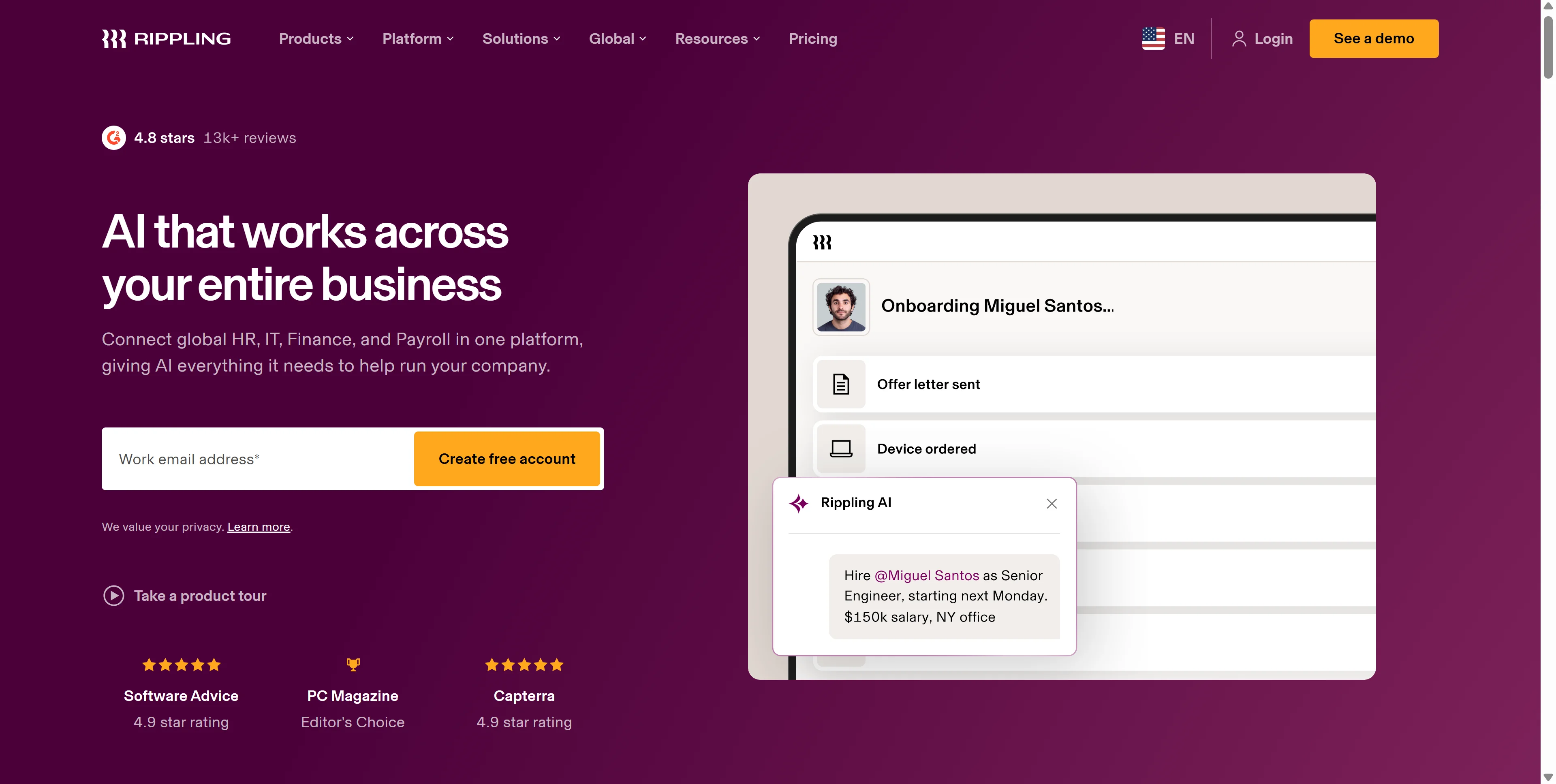 Pricing: Modular per-employee pricing, generally transparent by HCM standards.
Who should NOT use Rippling: Traditional organizations with separate, established IT departments that don't want HR software touching device management. Also weak fit for hourly-workforce-heavy industries where scheduling depth matters more than app provisioning.
isolved People Cloud
isolved serves over 6 million employees across 168,000 employers with an employee-experience-first design covering the lifecycle from pre-hire to retire. The Mojo engagement tools add 360 reviews, surveys, goals, and recognition feeds.
Who should NOT use isolved: Companies wanting a household-name vendor for board-level comfort, or those needing deep global payroll, where the bigger names carry more capability.
Small Business Tier: Under 100 Employees
If you're this size and evaluating UltiPro, the honest answer is that you should be looking at this tier instead.
Gusto: The Simplicity Champion
Gusto focuses on making payroll, onboarding, time tracking, and benefits genuinely accessible. Where UKG Pro demands configuration, Gusto works out of the box with published pricing and no custom quoting.
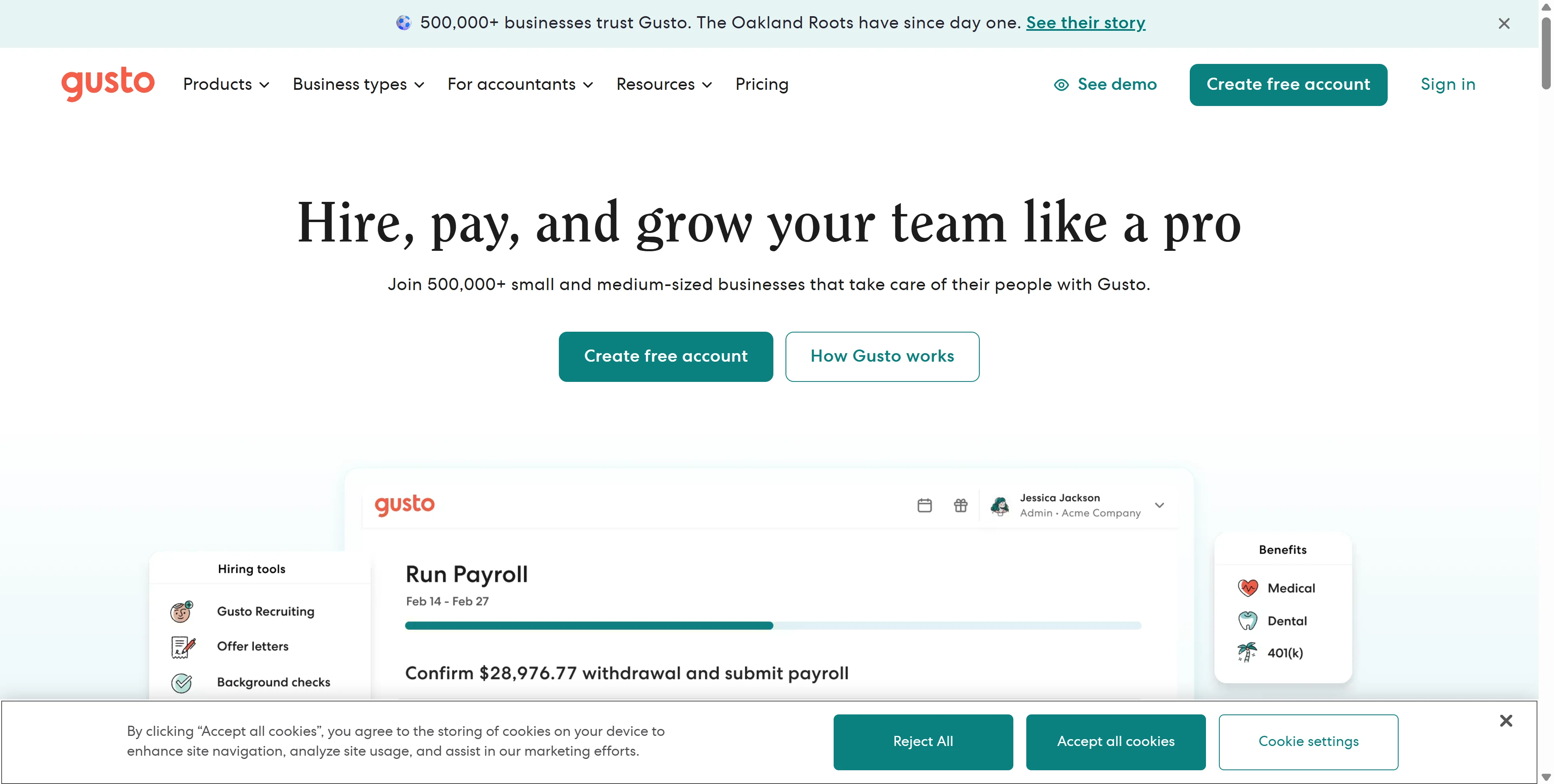 Who should NOT use Gusto: Anyone over roughly 200 employees or with multi-state complexity at scale. You will outgrow it, and migrating HCM platforms twice in three years is a mistake worth avoiding upfront.
BambooHR: The HR-First Pick
BambooHR is built for companies that need strong people management without enterprise complexity. Hiring, onboarding, time tracking, and performance run through genuinely intuitive workflows, with payroll as an optional add-on.
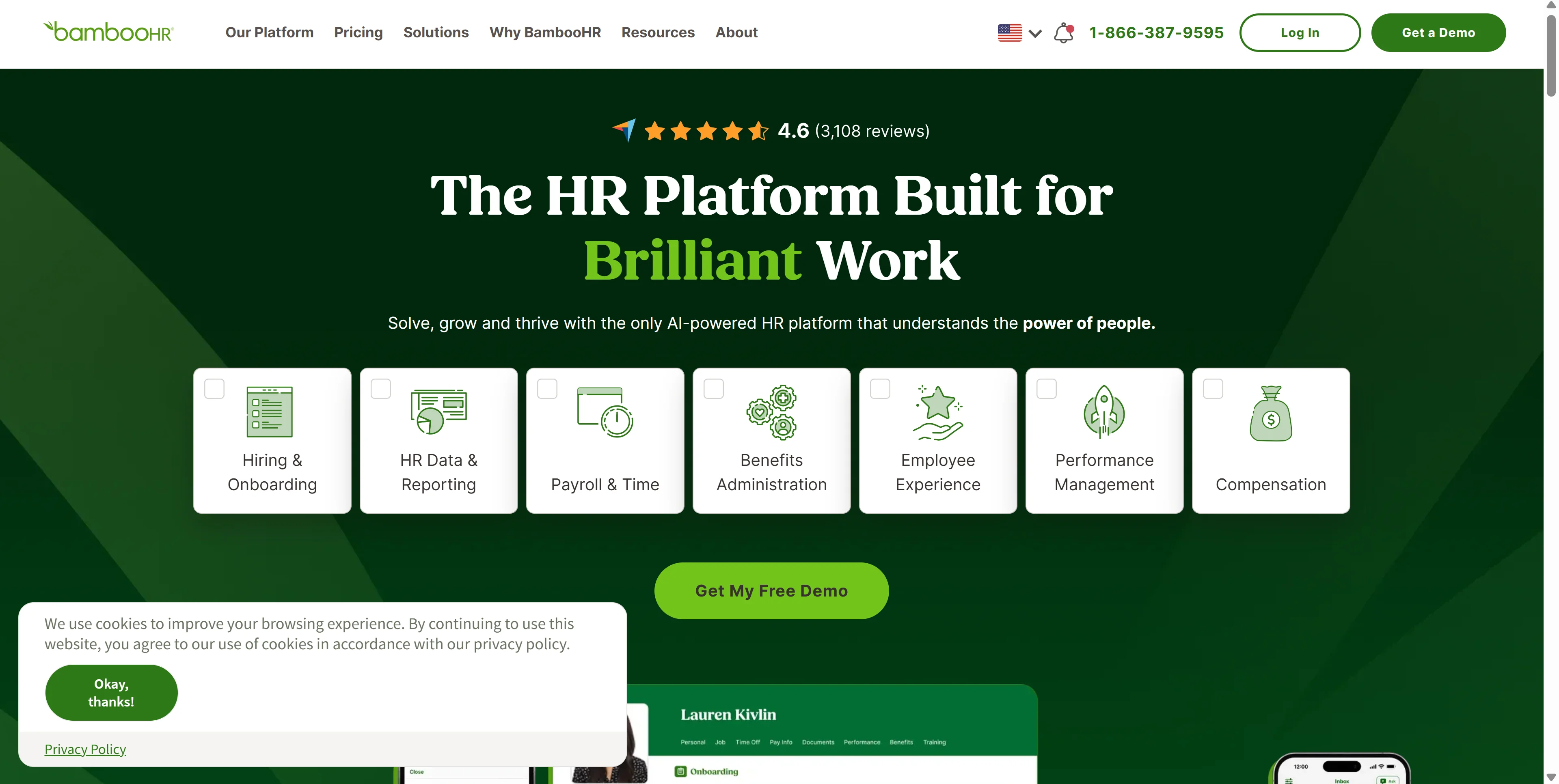 Who should NOT use BambooHR: Payroll-first organizations. The payroll module is an add-on rather than the core, and companies whose primary pain is complex pay runs will find it thin.
Justworks: The Outsourced Route
Justworks is a PEO rather than pure software, bundling payroll, benefits, compliance support, and HR assistance under clear per-employee pricing. You're effectively outsourcing the HR back office.
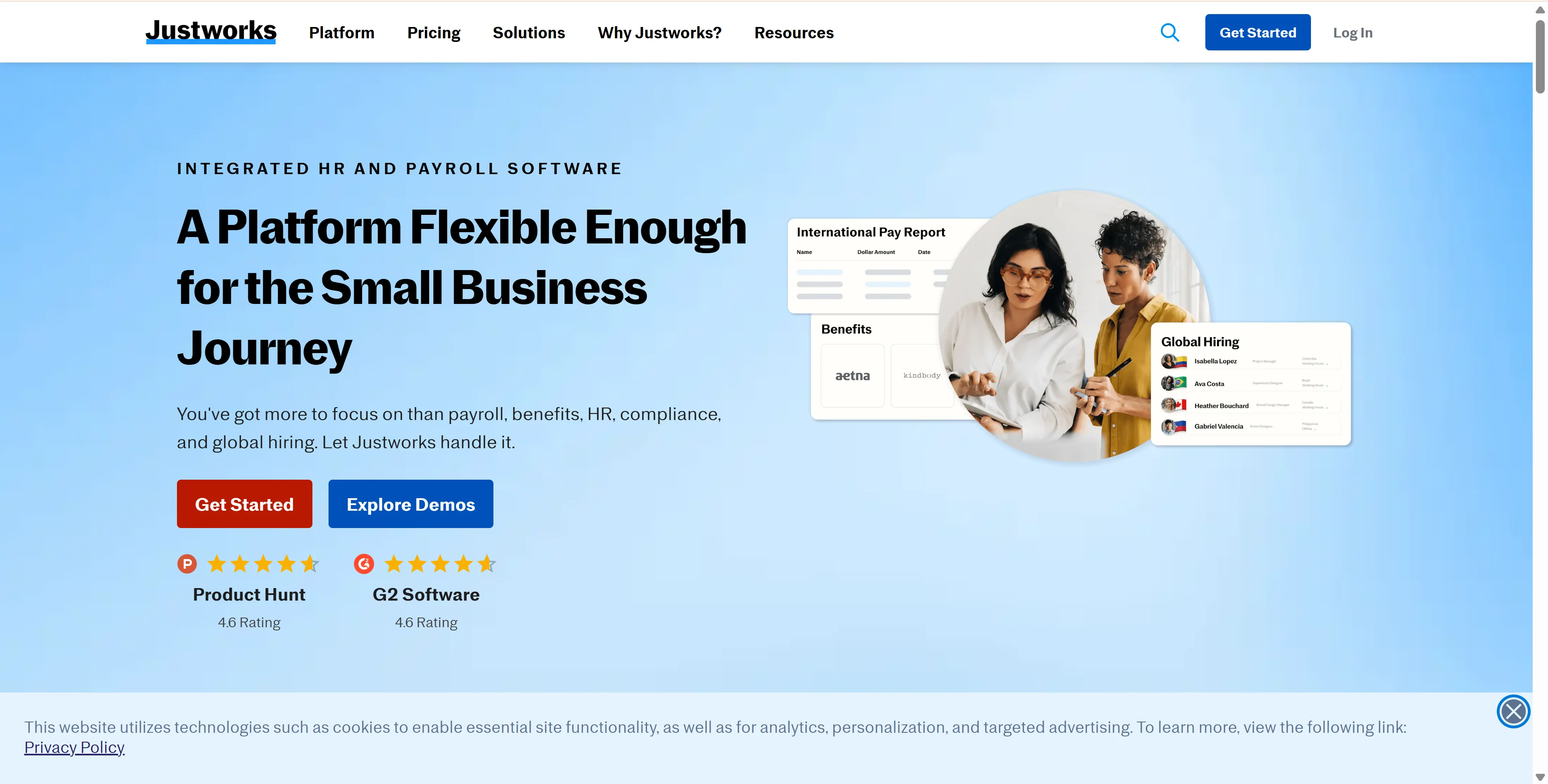 Who should NOT use Justworks: Companies that want control and configurability. A PEO means adopting their processes, their benefits carriers, and their way of working. Fast-scaling companies also eventually hit the ceiling where in-house HR plus software beats the PEO model on cost.
The Section Nobody Writes: What Switching Actually Costs
Every comparison article ends at "request a demo." Here's what happens after, because the migration is where budgets and timelines actually break.
Implementation fees typically run 20 to 50 percent of first-year subscription cost on mid-market platforms, and far more at enterprise tier. Get this number in writing before signing anything.
Data migration is the silent killer. Years of payroll history, tax records, and employee documents have to move cleanly. Ask every vendor who performs the migration, what it costs, and who's liable for errors.
Parallel running means paying for both systems during transition, usually one to three months of double payment that nobody budgets for.
The timing rule that saves real money: payroll platform switches go smoothest at calendar year-end, when tax reporting resets. A mid-year switch means split-year W-2 complexity that your accountant will bill you for handling.
For organizations managing large contractor and external workforces alongside employees, the evaluation criteria shift again entirely, and we broke down that specific category in our BeeForce by BlueTree review, which covers the contractor lifecycle side that traditional HCM platforms handle poorly.
Five Demo Questions That Expose Weak Vendors
Walk into every sales demo with these, because polished demos hide the answers you actually need.
Ask what the all-in first-year cost is including implementation, migration, and training, in writing. Ask who owns data migration errors contractually. Ask what the average implementation timeline was for their last ten customers your size, not their best case.
Ask what happens to your data if you leave, including export formats and fees. And ask them to show the exact workflow your team runs most, live in the demo environment, not in slides.
Vendors comfortable with all five are worth shortlisting. For deeper vendor evaluation frameworks, the Society for Human Resource Management publishes ongoing HR technology guidance at SHRM, which is the reference standard HR teams lean on for exactly these decisions.
The Quick Decision Table
Your Situation | Best Fit |
|---|---|
Enterprise, global, analytics-heavy | Workday |
Complex payroll rules, real-time needs | Dayforce |
Mid-market wanting the best-rated platform | Paycom |
Culture and engagement priority | Paylocity |
HR + IT consolidation | Rippling |
Under 200 employees, simplicity first | Gusto |
HR-first, payroll secondary | BambooHR |
Want to outsource HR entirely | Justworks |
Staying enterprise but hate UKG's complexity | Dayforce or Paycom |
FAQs
What replaced UltiPro?
UltiPro became UKG Pro after Ultimate Software merged with Kronos in 2020, carrying forward the same core payroll and HR capabilities.
What is the best UltiPro competitor overall?
Paycom holds the highest G2 rating at 4.5 stars among alternatives, while Workday leads for enterprises and Gusto for small teams.
Is UKG Pro good for small businesses?
No, it's built for mid-sized and enterprise organizations, and smaller teams pay for complexity they'll never use.
How much do UltiPro alternatives cost?
Most mid-market and enterprise platforms require custom quotes, while Gusto and Justworks publish transparent per-employee pricing.
When is the best time to switch HR platforms?
Calendar year-end, when tax reporting resets, avoiding the split-year W-2 complexity of mid-year migrations.