
A company I consulted for last year had a data scare that still bothers me. They'd hired a freelance developer, given him full VPN access to their internal network, and forgotten about it. The contract ended in March. His VPN credentials still worked in September.
Six months of an outsider having a live tunnel into their systems. Nothing bad happened, but nothing was stopping it either.
That situation is exactly what the term VPN contractor covers. How businesses give external workers secure access, and how contractors protect themselves on the other side of that connection. Here's the complete picture from both angles.
What VPN Contractor Actually Means
The phrase gets used two different ways and both matter.
The first meaning is business-side. How a company provisions VPN access for contractors, freelancers, and temporary workers who need to reach internal systems without being full employees.
The second meaning is contractor-side. The VPN a freelancer or independent contractor uses to protect their own work, secure client data, and maintain professional-grade security while working from home, coworking spaces, and cafes.
Both sides of this connection carry real risk when done wrong. Let me walk through each one properly.
 The Business Side: Giving Contractors Access Without Giving Away the Keys
Here's the core problem companies face. A contractor needs access to internal tools, databases, or file servers to do their job. But they're not an employee. They'll be gone in three months. And their laptop is completely outside your IT department's control.
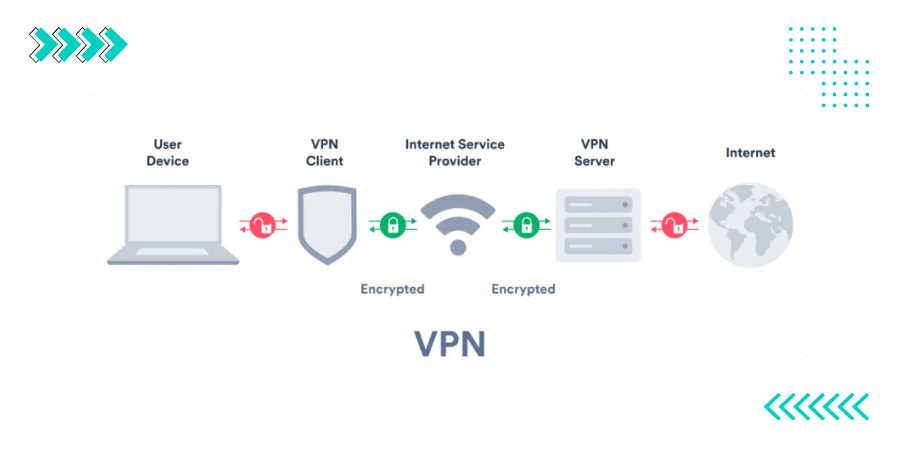
A VPN creates a pipe between the corporate network and the contractor's location, extending the network to their home office as if they were inside your building. That extension only works well if your underlying network infrastructure is actually ready for it. Our piece on IT cabling specialists covers why the physical network layer, cable organization, switch capacity, and wireless coverage matters just as much as your VPN setup before adding remote contractor access at scale.
That's powerful and dangerous at the same time. The same tunnel that lets them work also lets them reach everything else on your network unless you deliberately limit it.
The Access Expiration Problem
This is the mistake from my opening story and it's the most common one.
Contractors require temporary access that expires automatically. When contracts end, access must terminate immediately.
Consumer VPN setups and basic corporate VPNs don't handle this well. Someone has to remember to revoke credentials manually. People forget. Contracts end quietly. Access lingers.
Business VPN platforms built for this problem let you set access windows that expire on a date. The contract ends June 30, the VPN access dies June 30, and nobody has to remember anything.
The Least-Privilege Principle
The second critical piece is limiting what contractors can actually reach.
Granular access control means you can set specific permissions so that team members, contractors, or vendors only see the company resources relevant to their roles, reducing the risk of accidental exposure.
A freelance designer working on your marketing site has no reason to reach your customer database. A bookkeeping contractor has no reason to touch your code repositories. Modern business VPN and zero trust platforms let you segment access down to specific applications rather than opening the whole network.
The framework worth knowing here is what the security industry calls zero trust. Every access request receives fresh authentication and authorization checks, with least-privilege access limiting users to only needed resources and micro-segmentation containing breaches.
The official guidance on this architecture comes from NIST's Zero Trust Architecture publication, which has become the reference standard for how organizations should structure remote access for employees and contractors alike.
When a Consumer VPN Isn't Enough
Here's the honest decision framework for businesses.
If you need to track who accessed what and when for compliance audits, security investigations, or regulatory requirements, you need a business VPN platform. Consumer plans have no audit trail.
If you have contractors or temporary workers whose access must terminate automatically, you need a business VPN. Consumer plans have no centralized credential management.
If different team members need different access levels, you need a business VPN. Consumer plans give everyone the same tunnel to everywhere.
Platforms like NordLayer, OpenVPN CloudConnexa, and Twingate are built for exactly this. NordLayer starts around $8 to $12 per user per month with centralized management. OpenVPN's CloudConnexa delivers scalable zero trust remote access with centralized management without the cost of a full enterprise re-platforming project.
For a company managing five contractors, that's under $60 a month to eliminate the exact risk that my client spent six months exposed to.
The Contractor Side: Protecting Yourself and Your Clients
Now flip the perspective. You're the freelancer or independent contractor. Why do you personally need a VPN, and which kind?
The Public Wi-Fi Reality
Coffee shops, airports, hotel lobbies, and coworking spaces are where contractors actually work. These networks are playgrounds for packet sniffers. A VPN encrypts everything between your laptop and the internet.
If you're handling client files, logging into client systems, or discussing anything confidential over an unencrypted connection, you're exposing your client's data and your own professional reputation simultaneously.
Just like setting up secure contractor access, managing your account login correctly is equally important for example, knowing how to access platforms like Princess House starts with understanding the login process.
The Compliance Angle Most Freelancers Miss
Here's something that matters more than most independent workers realize.
If you handle client data, healthcare records, or financial information, encryption in transit isn't just smart. It may be legally required.
A freelance bookkeeper handling client financials, a healthcare VA processing patient scheduling, a developer with access to a client's user database. All of these carry data protection obligations that follow the data, not the employment status. Contractors are not exempt from GDPR, HIPAA-adjacent obligations, or client contractual security requirements just because they're independent.
A VPN doesn't solve compliance by itself. But encrypted transit is the baseline expectation in almost every data protection framework, and working without it puts you on the wrong side of that baseline.
What Contractors Should Actually Look For
From everything I went through, here's the practical checklist for an independent contractor choosing a personal VPN.
A kill switch is non-negotiable. If your VPN connection drops unexpectedly, a kill switch immediately cuts your internet access so no unencrypted data leaks out.
A verified no-logs policy matters. A VPN provider that logs your activity defeats the purpose. Stick with providers that have been independently audited.
Multi-device coverage is practical. You work across a laptop, phone, and maybe a tablet. Look for VPNs covering at least five simultaneous connections under one subscription.
A dedicated IP option is underrated for contractors specifically. Many SaaS tools and client systems flag logins from constantly changing locations. A dedicated IP gives you a consistent footprint that doesn't trigger security alerts on your client's side every time you connect.
The Honest Recommendations for 2026
Based on current independent testing, here's where the market actually stands.
NordVPN remains the most well-rounded option with NordLynx protocol speeds, Threat Protection, dedicated IP availability, and independently audited no-logs policies. Around $3.89 per month on longer plans.
Mullvad is the maximum privacy pick at a flat €5 per month. It doesn't even ask for your email address when you sign up. Multiple independent audits, blazing WireGuard speeds, and refreshingly no upsells.
Proton VPN is the pick for contractors handling legally sensitive data. Swiss jurisdiction provides strong privacy protections including requirements for court orders before any data requests can be processed. Its free tier is also the only free VPN worth using, with no data caps and the same no-logs policy as paid plans.
Surfshark offers unlimited simultaneous connections, which stands out if you run a lot of devices or share an account across a household.
The Setup That Actually Works: Practical Configuration
Knowing which VPN to use is half the answer. Here's the configuration side that most guides skip.
Enable auto-connect on untrusted Wi-Fi so the VPN comes up automatically whenever you join a non-home network. The most common failure isn't a bad VPN. It's forgetting to turn it on.
Pick one or two nearby servers optimized for performance rather than exotic locations. Lower latency matters more for video calls than impressive-sounding server locations.
Enable the kill switch and DNS leak protection from day one. Avoid routing your work browser or terminal outside the tunnel through split tunneling unless you have a specific reason.
Test your Zoom or Teams quality over the VPN during a non-critical call before an important one. If quality is poor, switch to a closer server or toggle between WireGuard and OpenVPN protocols.
And one thing worth flagging: if your client enforces their own corporate VPN on the work you do for them, follow their IT policy first. Many corporate networks restrict access to known IP ranges, and stacking a personal VPN on top of a corporate one can break access entirely. Check before you stack.
Where VPN Contractor Management Meets Workforce Management
Here's the bigger operational picture worth understanding if you're on the business side of this.
VPN access is one piece of the contractor lifecycle. Onboarding, verification, access provisioning, work tracking, payment, and offboarding all connect. The companies that handle contractor security well treat access as part of that full lifecycle rather than a one-time IT ticket.
The offboarding step is where the whole chain usually breaks. The contract ends, payroll stops, but nobody closes the loop on system access. If your organization manages external workers at any real scale, pairing your access management with a proper workforce platform closes that gap. We covered how that full contractor lifecycle works in our BeeForce by BlueTree review, which handles the onboarding-through-offboarding chain that VPN access should be tied into.
When access termination is connected to contract status automatically, the six-months-of-forgotten-credentials situation becomes structurally impossible. That's the goal.
The Decision Framework: What You Should Actually Do
Let me compress everything into the practical decision paths.
You're a business hiring your first contractors: start with a business VPN platform like NordLayer or Twingate rather than sharing consumer VPN credentials. Set expiring access from day one. It costs almost nothing compared to the exposure it eliminates.
You're a business with an existing corporate VPN: audit your current contractor credentials this week. Every active credential should map to an active contract. Anything that doesn't gets revoked today.
You're a freelancer handling ordinary client work: NordVPN or Surfshark covers everything you need. Enable kill switch and auto-connect, and you're professionally covered for under $4 a month.
You're a contractor handling sensitive or regulated data: Proton VPN or Mullvad for maximum privacy posture, plus a conversation with each client about their specific security requirements before you touch their data.
You're a contractor on a zero budget: Proton VPN's free tier. It's the only free option with no data caps and a real audited no-logs policy. Upgrade when the client work justifies it.
FAQs
What does VPN contractor mean?
It refers to VPN access provisioning for external contractors by businesses, or the personal VPN a contractor uses to secure their own client work and data.
Do contractors need a business VPN or consumer VPN?
Individual contractors need a consumer VPN like NordVPN or Proton VPN. Businesses providing access to contractors need a business platform with expiring credentials and access controls.
Why should contractor VPN access expire automatically?
Manual revocation gets forgotten when contracts end, leaving live tunnels into company systems. Automatic expiration tied to contract dates eliminates that exposure entirely.
What is the best VPN for freelancers in 2026?
NordVPN for overall balance, Mullvad for maximum privacy, Proton VPN for sensitive data and the only usable free tier, Surfshark for unlimited devices.
Is a VPN legally required for contractors handling client data?
Not by name, but encryption in transit is a baseline requirement in most data protection frameworks covering financial, health, and personal data that contractors regularly handle.